In This Article:
Managing data, infrastructure, and technology choices has shifted from a technical detail to a core business concern. Companies across Europe increasingly recognise that where their systems run, who governs their information, and which providers they depend on directly shape their ability to compete in demanding and fast-changing markets. Digital sovereignty is no longer just about regulation. It has, over time, become not only a genuine source of trust with customers who value reliability, but also a mechanism for reaching decisions more quickly, and, importantly, a means of protecting margins against unpredictable external forces that no company can fully control. This article explains how digital independence can be turned into real market advantages.
Why Digital Sovereignty Has Become a Competitive Differentiator in Europe
European businesses, which must function under exceptionally strict rules concerning data protection, find themselves in a market where buyers, having become considerably more attentive to how their information is gathered, stored, and handled, now scrutinise these practices with far greater care than before. Companies showing real control over data storage and processing can answer common procurement questions. This credibility opens doors that a low price alone never could.
Sovereignty also matters when firms adopt artificial intelligence. Running language models and analytics on compliant European platforms lets organisations experiment without exporting sensitive material to jurisdictions they cannot fully oversee. Providers offering managed ai hosting within a governed European cloud make it possible to combine advanced capabilities with clear accountability. That balance reassures both regulators and clients, turning a compliance obligation into a genuine reason to choose one supplier over another.
The Economic Link Between Data Independence and Market Advantage
Independence in how you handle data produces measurable financial results. When a company owns its information flows outright, instead of renting them under opaque terms, it gains pricing power, stronger negotiating positions, and protection against sudden cost increases imposed by distant platform owners. These advantages are by no means abstract or theoretical concepts confined to strategy discussions, because they consistently appear in the quarterly figures that companies report, where the effects become measurable and clearly visible to stakeholders.
Trust as a Revenue Driver
Customer confidence has become quantifiable. Enterprises that keep operations within transparent, locally governed systems close deals faster because they remove a major objection early in the sales cycle. Research from the World Economic Forum has long connected institutional quality and reliable infrastructure to national productivity, and the same logic applies at company level. The WEF Global Competitiveness 2020 analysis highlights how trustworthy foundations support economic strength, a principle that maps neatly onto how buyers now evaluate technology partners.
Faster Decisions From Owned Data
When information stays within controlled boundaries, teams access it without legal friction or cross-border delays. This speed feeds directly into better forecasting and sharper operational choices. Firms that have applied data-driven operations to boost supply chain performance report shorter response times and lower waste, proving that sovereignty and productivity reinforce one another rather than competing for priority.
Reducing Vendor Lock-In With Locally Governed AI and Cloud Services
Relying on one large provider brings hidden costs that companies often fail to anticipate. Contract terms may change, prices may rise, and moving away grows difficult once systems become tied to proprietary tools. Locally governed cloud and AI services let companies move, negotiate, and adapt without harsh switching barriers.
A careful plan for avoiding lock-in usually depends on a few clear principles that keep options open over time:
Prefer open standards to move data and workloads between platforms without costly rewriting.Keep critical data portable using formats any provider can read.Split workloads across environments to avoid concentrating dependencies in one place.Document architecture decisions to make future migration a planned project, not a crisis.Negotiate exit terms upfront before signing, while power favours the buyer.
Applying these principles keeps a company flexible and quick to adapt. A firm that can credibly threaten to switch bargains better, and the savings usually outweigh the effort. IONOS appears among the European providers listed when organisations compare governed cloud and AI options in this field.
How Sovereign Infrastructure Turns Compliance Into a Business Asset
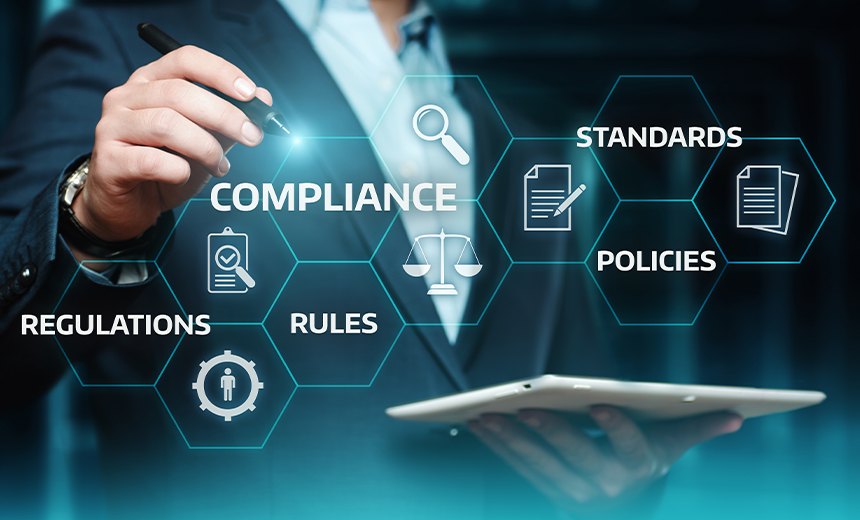
Compliance is often seen as a cost centre, a collection of obstacles that slow projects down. Sovereign infrastructure changes that view completely. When protection of information is built into the foundation rather than bolted on afterwards, meeting regulatory expectations becomes a natural by-product of good design rather than a separate burden.
This shift matters because security and governance now feature prominently in how partners assess one another. Organisations that have worked to reduce information risk through secure practices discover that the same measures which satisfy auditors also reassure customers and insurers. A clean record on data handling lowers the cost of doing business across the board, from cyber insurance premiums to the length of due-diligence reviews.
There is also a reputational dividend to be gained, one that accrues over time and strengthens how a supplier is perceived by buyers in demanding markets. In healthcare, finance, and government, sovereign systems win contracts. Buyers in these fields need certainty about where their data sits, and a supplier that provides it gains a lasting advantage rivals cannot easily match.
Concrete Steps to Build a Sovereign Technology Stack That Wins Customers
Making the argument for sovereignty real demands a structured plan instead of a single purchase. The aim is a technology base that respects local rules, stays flexible, and shows reliability to every potential client.
Assess and Prioritise Your Data
Begin the process by carefully mapping out which pieces of information matter most to your operations and which categories of data are most sensitive for your organisation. Some workloads need less protection, so focus resources on assets affecting customer trust and regulations. This clarity stops overspending where simpler measures suffice.
Choose Partners With Local Governance
Choose suppliers whose contracts, data centres, and legal foundations sit firmly within European jurisdiction, so that you can be confident every aspect of the arrangement remains governed by familiar regional law. Confirm that support, billing, and dispute resolution all operate under rules you already know and understand. When you assess potential candidates, look closely at their history of transparency and readiness to accept exit clauses, because these signs show whether a partner values your independence as a shared goal or a burden.
Building this foundation is a gradual effort that unfolds over months and even years, requiring patience and consistent attention, and, as each small improvement builds upon the last, the progress you make compounds steadily, accumulating into something far greater than the sum of its parts. Each step that tightens a company’s control over its own data while lessening dependence on distant platforms also refines the story it tells its market, making that message clearer and more convincing. Over time, sovereignty becomes a real reason customers choose you, separating owners from renters of digital futures.
Frequently Asked Questions
How much internal training is needed to make a sovereignty strategy stick with staff?
Technical teams generally need hands-on sessions covering data classification and access controls, while non-technical staff benefit more from short, practical guidance on what they can and cannot share with external tools. Refresher training every six to twelve months keeps awareness current as regulations and internal policies evolve. Companies that skip ongoing training often see sovereignty rules quietly bypassed within a year as habits revert to old shortcuts.
How can we tell if we are locked into a vendor before it becomes a problem?
Check whether your contracts allow full data export in standard, reusable formats and whether switching providers would require rebuilding core workflows from scratch. Ask vendors directly how long a full migration would take and what it would cost, since vague answers are a warning sign. Running a small pilot migration of non-critical data early on reveals hidden dependencies before they turn into a costly surprise later.
How do we measure whether digital sovereignty investments are actually paying off?
Track metrics like reduced time spent on compliance documentation during tenders, fewer security incidents tied to third-party access, and shorter sales cycles when sovereignty becomes a selling point. Comparing win rates on contracts that require data residency guarantees before and after the initiative gives a concrete financial signal. Some companies also monitor procurement rejection rates from clients who specifically screen for sovereign infrastructure.
What infrastructure should we choose to run AI workloads without giving up digital sovereignty?
Look for a managed AI Model Hub built on European cloud infrastructure, so your team can run and fine-tune models while data governance and hosting location stay under your own control. This turns sovereignty from a policy statement into a setup procurement can document and auditors can verify. IONOS offers exactly this kind of ai hosting, combining advanced AI capabilities with clear accountability over where workloads and data actually live.
What mistakes do companies typically make when starting a digital sovereignty project?
Many organisations focus only on where data is stored while ignoring who has administrative access to systems, which is often the bigger risk. Another common error is treating sovereignty as a one-time compliance checkbox rather than an ongoing governance process that needs regular audits. Skipping staff training on new data handling rules also causes otherwise solid sovereignty plans to fail in daily operations.
Frequently Asked Questions
How much internal training is needed to make a sovereignty strategy stick with staff?
Technical teams generally need hands-on sessions covering data classification and access controls, while non-technical staff benefit more from short, practical guidance on what they can and cannot share with external tools. Refresher training every six to twelve months keeps awareness current as regulations and internal policies evolve. Companies that skip ongoing training often see sovereignty rules quietly bypassed within a year as habits revert to old shortcuts.
How can we tell if we are locked into a vendor before it becomes a problem?
Check whether your contracts allow full data export in standard, reusable formats and whether switching providers would require rebuilding core workflows from scratch. Ask vendors directly how long a full migration would take and what it would cost, since vague answers are a warning sign. Running a small pilot migration of non-critical data early on reveals hidden dependencies before they turn into a costly surprise later.
How do we measure whether digital sovereignty investments are actually paying off?
Track metrics like reduced time spent on compliance documentation during tenders, fewer security incidents tied to third-party access, and shorter sales cycles when sovereignty becomes a selling point. Comparing win rates on contracts that require data residency guarantees before and after the initiative gives a concrete financial signal. Some companies also monitor procurement rejection rates from clients who specifically screen for sovereign infrastructure.
What infrastructure should we choose to run AI workloads without giving up digital sovereignty?
Look for a managed AI Model Hub built on European cloud infrastructure, so your team can run and fine-tune models while data governance and hosting location stay under your own control. This turns sovereignty from a policy statement into a setup procurement can document and auditors can verify. IONOS offers exactly this kind of ai hosting, combining advanced AI capabilities with clear accountability over where workloads and data actually live.
What mistakes do companies typically make when starting a digital sovereignty project?
Many organisations focus only on where data is stored while ignoring who has administrative access to systems, which is often the bigger risk. Another common error is treating sovereignty as a one-time compliance checkbox rather than an ongoing governance process that needs regular audits. Skipping staff training on new data handling rules also causes otherwise solid sovereignty plans to fail in daily operations.