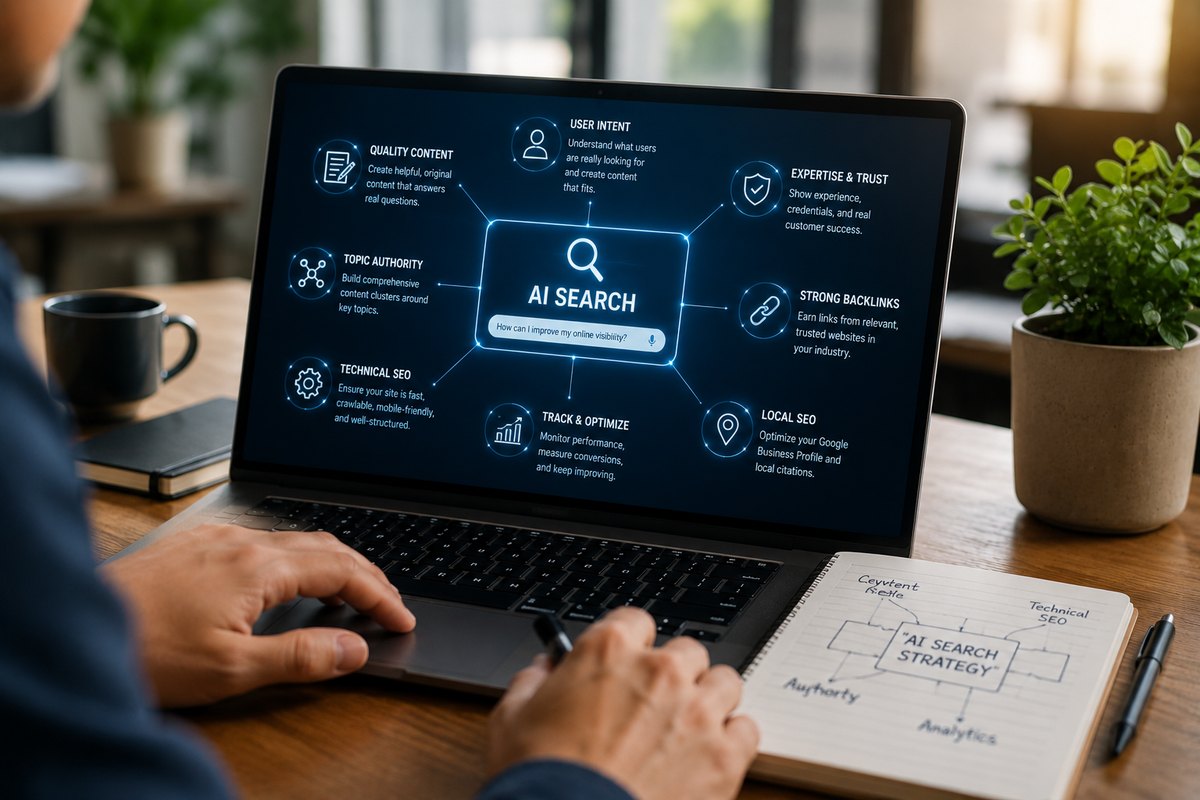

Search engine optimization has always been a fast-moving industry. What worked a few years ago may not work today, and marketers constantly need to adapt to new algorithms, ranking factors, and user behaviors. In recent years, artificial intelligence has emerged as one of the biggest influences on SEO, helping businesses streamline processes, create better content, and make smarter decisions.
AI isn’t replacing SEO professionals. Instead, it’s giving them powerful tools that help them work more efficiently and focus on strategy rather than repetitive tasks. From keyword research to content optimization, AI is transforming nearly every aspect of modern SEO.
In This Article:
Faster and Smarter Keyword Research
Keyword research is the foundation of any successful SEO strategy. Traditionally, marketers spent hours analyzing search terms, competition levels, and search volumes. AI-powered tools have significantly simplified this process.
Modern AI tools can quickly identify relevant keywords, uncover long-tail opportunities, and even predict emerging search trends. They analyze vast amounts of search data in seconds, helping businesses discover terms their target audience is actively searching for.
Beyond finding keywords, AI can also understand search intent. This means it can distinguish whether users are looking for information, products, services, or comparisons. As a result, marketers can create content that better matches what searchers actually want.
Content Creation Becomes More Efficient
Creating high-quality content consistently is one of the biggest challenges in SEO. AI writing tools can assist with brainstorming ideas, generating outlines, drafting articles, and improving readability.
While AI-generated content should never replace human expertise completely, it can dramatically speed up the content creation process. Writers can use AI to overcome writer’s block, organize complex topics, and produce first drafts more efficiently.
Many marketers also use tools such as Undetectable AI to refine AI-assisted content and improve readability. The real advantage comes when human creativity and AI capabilities work together. AI handles repetitive tasks, while human writers add expertise, personality, and unique insights that make content valuable and trustworthy.
Better Content Optimization
Publishing content is only part of the SEO equation. Optimizing that content for search engines and users is equally important.
AI-powered SEO platforms analyze top-ranking pages and provide recommendations for improving content quality. These tools can suggest related topics, semantic keywords, ideal content length, and readability improvements.
Many platforms also evaluate whether a page comprehensively covers a subject. Instead of focusing solely on keyword density, AI helps marketers create content that answers user questions more thoroughly.
This shift aligns with how search engines evaluate content today. Search engines increasingly prioritize relevance, expertise, and user satisfaction over outdated optimization tactics.
As AI-generated content becomes more common, ensuring accuracy and reliability is increasingly important. Tools like TruthScan can help marketers review content for factual consistency and identify potential issues before publication. This additional layer of verification supports higher-quality content that aligns with both user expectations and search engine quality standards.
Improved Technical SEO Analysis
Technical SEO can be intimidating, especially for businesses without dedicated SEO teams. Fortunately, AI is making technical audits easier to understand and manage.
AI tools can automatically crawl websites, identify errors, and prioritize issues based on their potential impact. They can detect broken links, slow-loading pages, duplicate content, indexing problems, and other technical concerns that affect search performance.
Rather than manually reviewing thousands of pages, website owners receive actionable recommendations that help them improve site health and user experience more efficiently.
Enhanced User Experience Insights
Search engines increasingly reward websites that provide excellent user experiences. AI helps businesses better understand how visitors interact with their websites.
Advanced analytics tools powered by AI can identify patterns in user behavior, highlight drop-off points, and uncover opportunities for improvement. Businesses can learn which pages engage visitors, which content drives conversions, and where users encounter friction.
These insights enable marketers to make data-driven decisions that improve both user satisfaction and search visibility.
Competitive Analysis Made Easier
Keeping an eye on competitors is an essential part of SEO. AI tools simplify this process by continuously monitoring competitor websites, content strategies, and ranking performance.
Marketers can quickly identify gaps in their content, discover new keyword opportunities, and analyze which topics are generating traffic within their industry.
For B2B marketers, ZoomInfo adds an AI-assisted layer to competitive and audience research. Its platform surfaces signals such as hiring surges, technology changes, budget shifts, and intent spikes, while providing verified contact data and buyer context. These insights can help teams identify in-market accounts, spot emerging opportunities, and shape SEO and content priorities around the needs of likely buyers.
Instead of spending hours gathering data manually, AI delivers valuable competitive insights in a fraction of the time. This allows businesses to respond more quickly to changes in the marketplace and stay ahead of emerging trends.
Predictive SEO and Future Trends
One of the most exciting developments in AI-driven SEO is predictive analysis. AI systems can analyze historical data, search trends, and market behavior to forecast future opportunities.
While no prediction is perfect, these insights can help businesses prepare content strategies before trends become highly competitive. Companies that identify emerging topics early often gain a significant advantage in search rankings.
As AI technology continues to evolve, predictive SEO will likely become an increasingly important component of digital marketing strategies.
The Human Element Still Matters
Despite the growing capabilities of AI, successful SEO still requires human judgment. Search engines prioritize content that demonstrates real expertise, experience, and value.
AI can help generate ideas and improve efficiency, but it cannot fully replace authentic industry knowledge, creative storytelling, or strategic decision-making. Businesses that rely entirely on automation may struggle to build trust and connect with their audiences.
The most effective approach combines AI-powered efficiency with human expertise. This balance allows organizations to produce high-quality content while maintaining authenticity and relevance.
Conclusion
AI tools are reshaping the SEO landscape by making research, content creation, optimization, and analysis more efficient than ever before. They help businesses save time, uncover new opportunities, and make smarter decisions based on data.
However, AI works best as a complement to human expertise rather than a replacement for it. As search engines continue to evolve, businesses that successfully combine AI technology with strategic thinking and valuable content will be best positioned for long-term SEO success.
The future of SEO is not about choosing between humans and AI. It’s about leveraging the strengths of both to create better experiences for users and achieve sustainable search growth.