Ask any marketer or content creator how many AI tools they’re currently paying for, and the answer is almost always more than they’d like. There’s one subscription for image generation, another for video, a separate one for product photography, maybe another for ad content. The fragmentation isn’t just expensive — it creates real workflow friction, with assets living in different places, different learning curves for each interface, and no coherent way to move between creative tasks.
That’s the problem a genuinely integrated AI creative platform solves. And it’s the problem that Pollo AI has been built specifically to address — not as a single-purpose tool, but as a multi-studio environment designed for the full range of visual content that modern creators and marketing teams actually need to produce.
What Pollo AI Actually Is
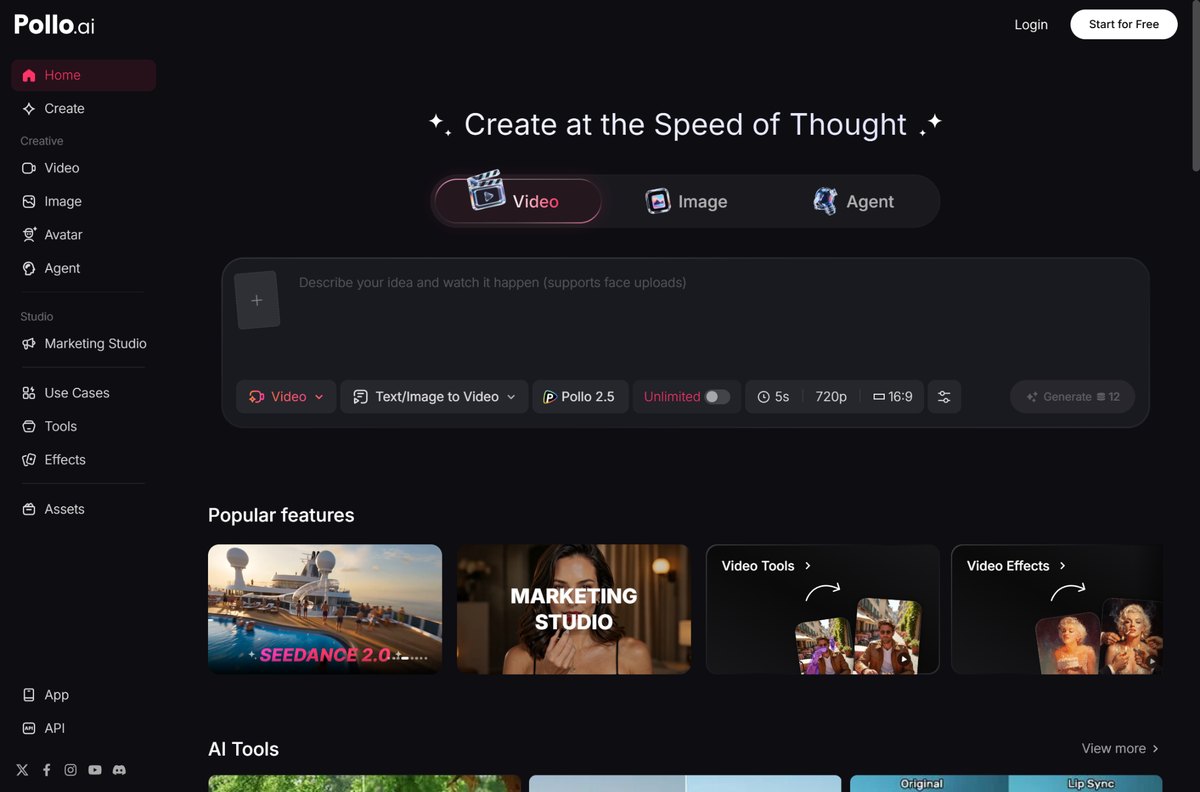
Pollo AI is organized around four dedicated studios, each targeting a specific creative use case: Creative Studio for content creators working with images, video, and audio; Marketing Studio for advertising and branded video content; Commerce Studio for e-commerce product imagery; and Design Studio for visual design work. All four operate under a single account with a shared credit system, which means you’re not managing separate billing relationships or rebuilding your asset library every time you switch between tasks.
The Creative Studio is where most general creators will spend their time. It aggregates access to multiple leading generation models — image, video, and audio — in one place, so you can work with the best tool for each specific output rather than being locked into whatever a single platform offers. For creators who care about output quality and need flexibility across different content styles, this model aggregation is a meaningful differentiator.
Marketing Studio: Built for Performance, Not Just Aesthetics
Creative quality and marketing effectiveness are related but not the same thing. A visually stunning video that doesn’t communicate a value proposition quickly, fit platform specs, or hold attention in a crowded feed isn’t doing its job. Pollo AI’s Marketing Studio is designed with that distinction in mind.
The studio targets marketers, brand teams, and creative agencies that need to produce advertising content — social ads, product demos, promotional video — at volume and speed. It’s positioned alongside dedicated marketing video tools like Creatify and Topview, but with the advantage of sitting inside a broader platform where your image and design workflows are already integrated. For agencies managing multiple client campaigns, or SMBs running their own paid social without a production team, that integration changes what’s practically achievable within a given budget and timeline.
Commerce Studio: Solving the Product Photography Problem
E-commerce brands face a specific visual content challenge that general-purpose AI tools don’t always handle well. Product photography needs to meet platform requirements, look consistent across a catalog, work across multiple background and lifestyle contexts, and be produced quickly enough to support frequent launches and seasonal updates.
Pollo AI’s Commerce Studio addresses this directly. It generates product images, e-commerce posters, and model photography using AI — the kind of output that competes with dedicated tools like Photoroom and Pixelcut, but inside the same platform where you’re already producing your video and design content. For brands that regularly need to refresh visual assets without spinning up a full photoshoot, this is a practical production capability rather than a novelty feature.
Adobe Firefly and the Broader AI Image Landscape

Understanding where Pollo AI sits requires some context about the broader landscape. Adobe Firefly has become a significant player in AI image generation, particularly for users already embedded in the Adobe ecosystem. Its integration with Photoshop and other Creative Cloud tools gives it a natural home in professional design workflows, and its commercially safe training data is a genuine selling point for brand teams concerned about IP.
Where Pollo AI takes a different approach is in flexibility and scope. Rather than anchoring to a single model or ecosystem, it gives users access to multiple generation models across image, video, and audio — letting you pick the right tool for each output. For creators and marketers who aren’t already Adobe-centric, or who need capabilities that extend beyond image generation into video and commerce, the multi-studio approach offers a wider range of practical applications.
Who Gets the Most Value From Pollo AI
The platform is most useful for three broad audiences. Content creators who produce across multiple formats — images, videos, audio — and want a single environment rather than a fragmented stack. Marketing teams and agencies that need both creative ideation capabilities and ad-ready video output without separate production workflows. And e-commerce brands that need consistent, high-quality product imagery at the speed their catalog updates demand.
What connects all three is the need for volume and consistency without proportional increases in cost or production time. AI creative tools in general solve part of that problem — Pollo AI’s value proposition is solving it across multiple content types at once, under one account, with one credit system.
The Practical Case for Consolidation
There’s a compounding benefit to consolidating your AI creative workflow that goes beyond the obvious cost savings. When your image generation, video production, and product photography tools all live in the same environment, the assets you create in one studio become immediately available for use in another. A product image generated in Commerce Studio can feed directly into a Marketing Studio ad. A creative concept developed in Creative Studio can be adapted for commercial use without exporting, re-importing, or rebuilding context.
For SMBs and independent creators working without large teams, that kind of workflow coherence isn’t just convenient — it’s what makes ambitious creative output actually achievable at the pace modern content demands.