In This Article:
Audience segments tell you whom to reach. Service and deal histories show how your business solves problems, and that is what AI developers are looking for.
Sponsored content from SourceX
Marketers have spent a decade learning to treasure first-party data. Collect it with consent, enrich it, segment it, activate it. Every privacy shift has made it more precious.
Here’s the twist. The part of your first-party data that interests AI developers is probably not the part your team spends the most time on.
A customer profile tells you whom to reach. A service history shows how your company resolved a real problem after that customer arrived. Both get filed under “first-party”. They’re not the same product, they don’t carry the same permissions, and they’re not useful for the same things.
That distinction is the starting point for any serious conversation about first-party data licensing for AI.
THE SHORT VERSION
- “First-party” covers two very different assets: audience data for targeting and operational records of real work.
- AI developers care about the second kind: connected histories of a request, the evidence, the action and the result.
- Mixed origins are the trap. Campaign permissions don’t automatically extend to AI training.
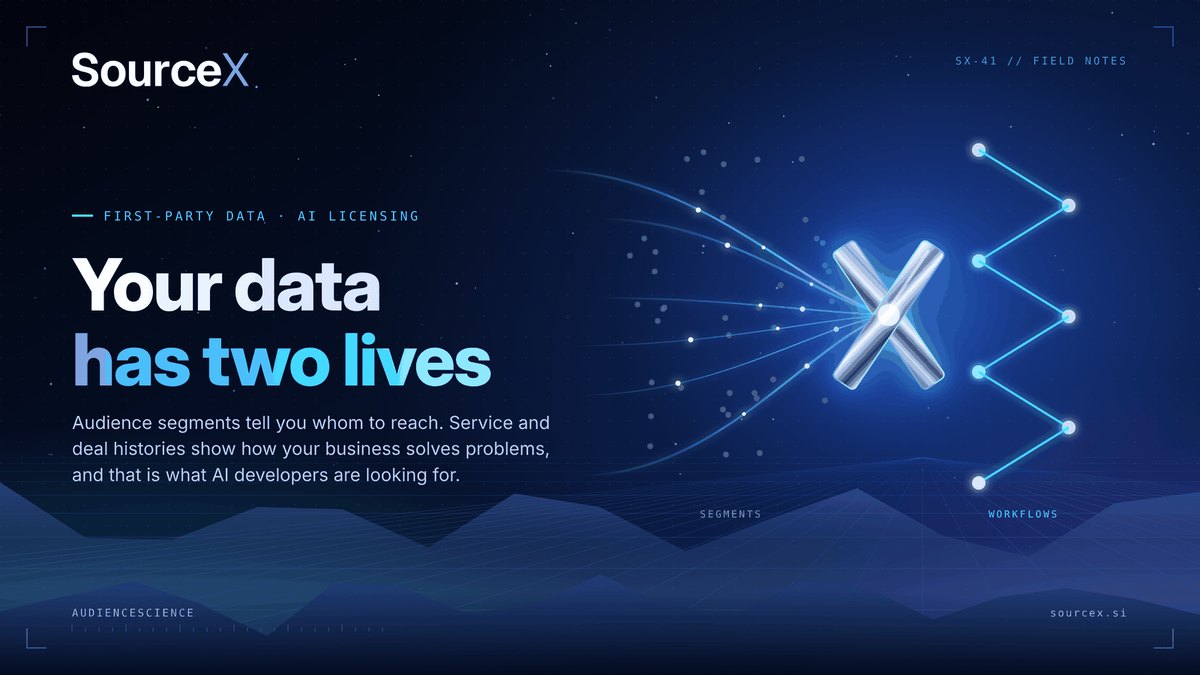
First-party data has two possible lives: targeting, and a record of how the business actually works.
What kind of first-party data is useful for AI training?
Operational records can explain work. Picture a case connecting a customer’s request, the evidence reviewed, the action taken and the resolution. That may support a workflow training or evaluation task. An audience segment serves a different purpose; it does not, on its own, document that sequence.
Put the difference in plain terms before anyone talks price:
- What capability could these records help train or evaluate?
- What context makes each task understandable?
- How is the outcome documented?
If those questions don’t have answers, a huge volume of customer information doesn’t add up to a useful AI dataset. If they do, even a modest archive deserves a closer look.
Why do mixed data origins matter so much?
Because marketing and revenue systems are blends. Inside one record you might find notes your team wrote, details the customer provided, a field a partner synced and attributes appended from a licensed enrichment vendor.
Each of those can carry different rights. Map origins before proposing any external license, and check whether the intended use is permitted for each part. Access granted for campaign operations doesn’t automatically authorize AI training or evaluation.
Expect to exclude things. A narrower operational collection with clean origins is often far more practical than a broad export whose restrictions nobody can reconcile. Reviewers trust a short, clean list more than a long, disputed one.
“First-party” describes where data came from. It doesn’t tell you what you’re allowed to do with it next.
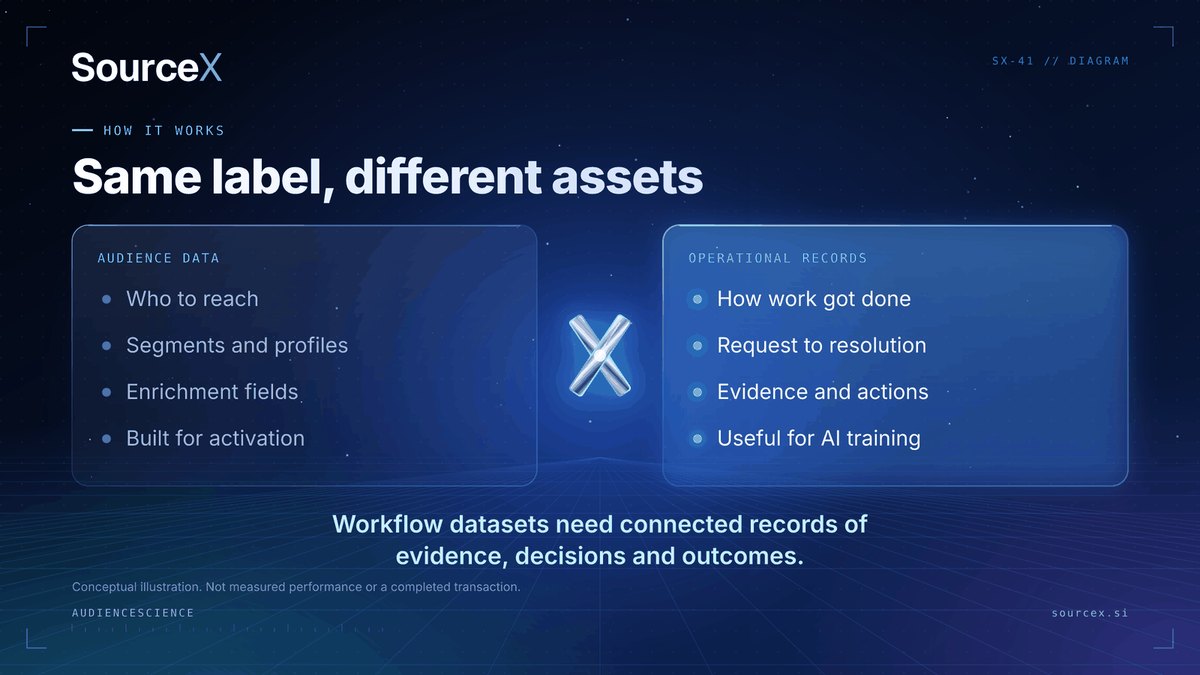
Conceptual comparison: audience data and operational records share a label but differ in purpose, permissions and AI usefulness.
Is first-party data automatically higher quality?
Quality depends on the task. A current email address matters for outreach but tells you little about a business decision. An older support case may explain a workflow while also containing obsolete personal details that need a retention and release review.
Define the task first, then the quality checks. Does the record preserve the sequence, the policy context and the outcome? Does the collection overrepresent one customer segment or one period?
Resist the industry habit of claiming internal data is inherently more accurate, more permissioned or more valuable than external sources. Knowing its provenance makes a review possible. It doesn’t replace one.
Does removing identifiers make the data safe to license?
It helps, but it doesn’t settle ownership, confidentiality or every risk of re-identification. Linked events and unusual circumstances can still point to a person. The rights owner, the security reviewer and the operational owner should agree on what the prepared collection may contain, and document both the transformations and the limits they create.
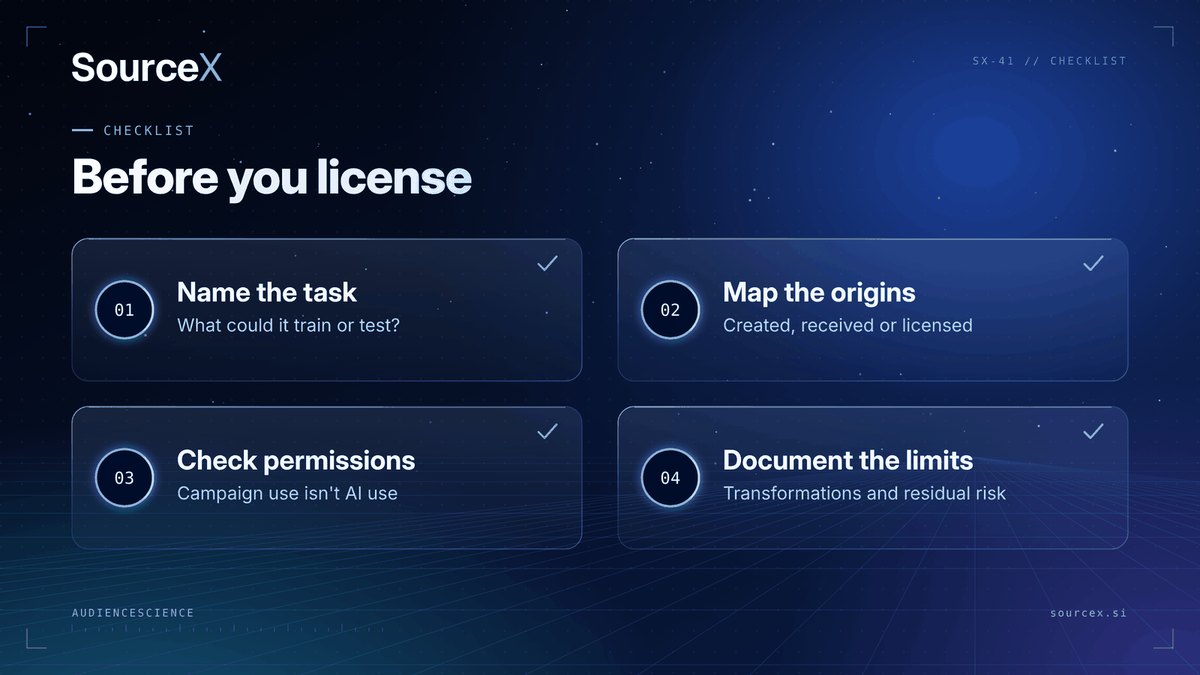
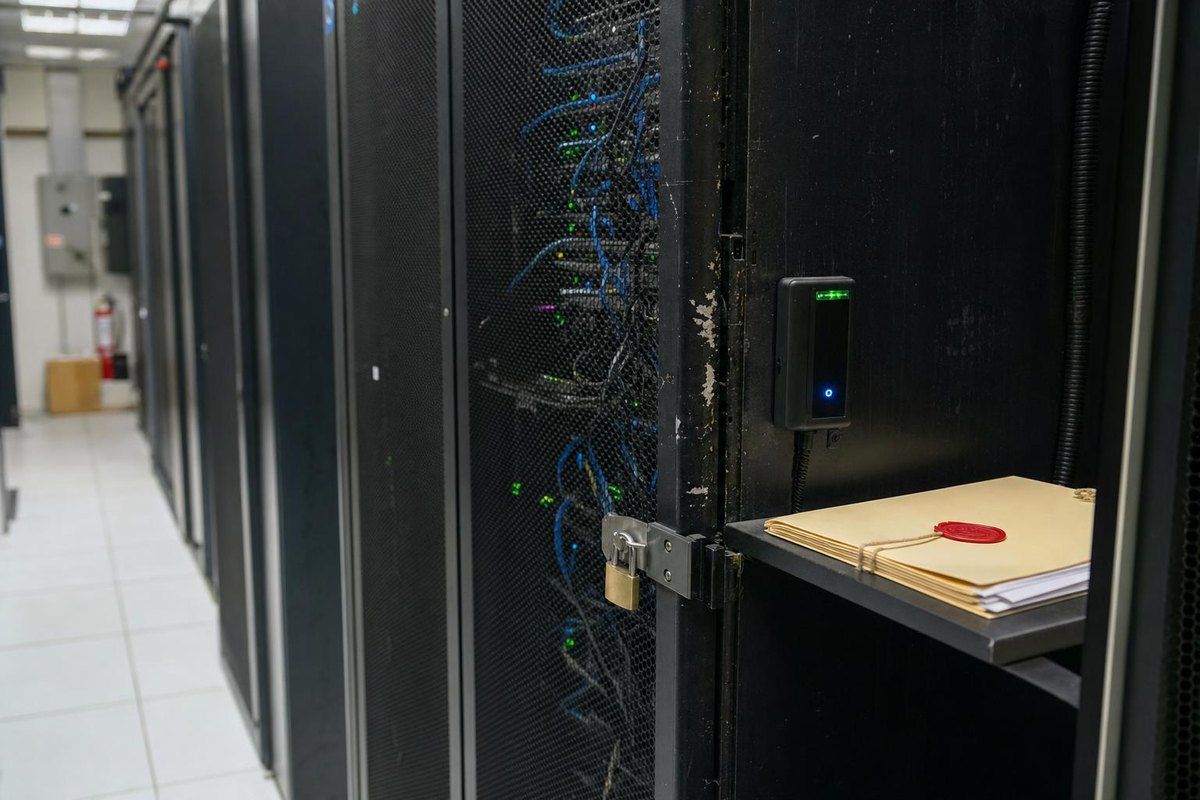
Origins and permissions come before any licensing conversation.
How does a company license operational data?
SourceX pays companies to license approved operational records for AI training and evaluation and manages the agreement, preparation and payout under signed terms. Its listed examples include support conversations, CRM histories, workflows, documents, call recordings and engineering records. That is a workflow-data proposition, not a reason to offer an audience file for targeting.
Its core fit is a business that has run for several years and peaked at 50 or more full-time employees. The ‘up to $4 million’ in its marketing marks the largest enterprise datasets; it is not a typical payout, and certainly not a price for an audience file. The actual collection and compensation are set only in a signed deal. The first step, a short fit check, never asks for customer records.
What should a marketing data leader do first?
Choose one operational workflow, such as support resolution or deal progression. Tag every source feeding it: written by your staff, supplied by customers, synced by partners or bought from an enrichment vendor. Then map the task and the restrictions side by side, so the gaps in permission are as visible as the gaps in data.
That swaps a vague question, “Can we monetize our first-party data?”, for one you can actually answer: does this specific, authorized history have a suitable second life?
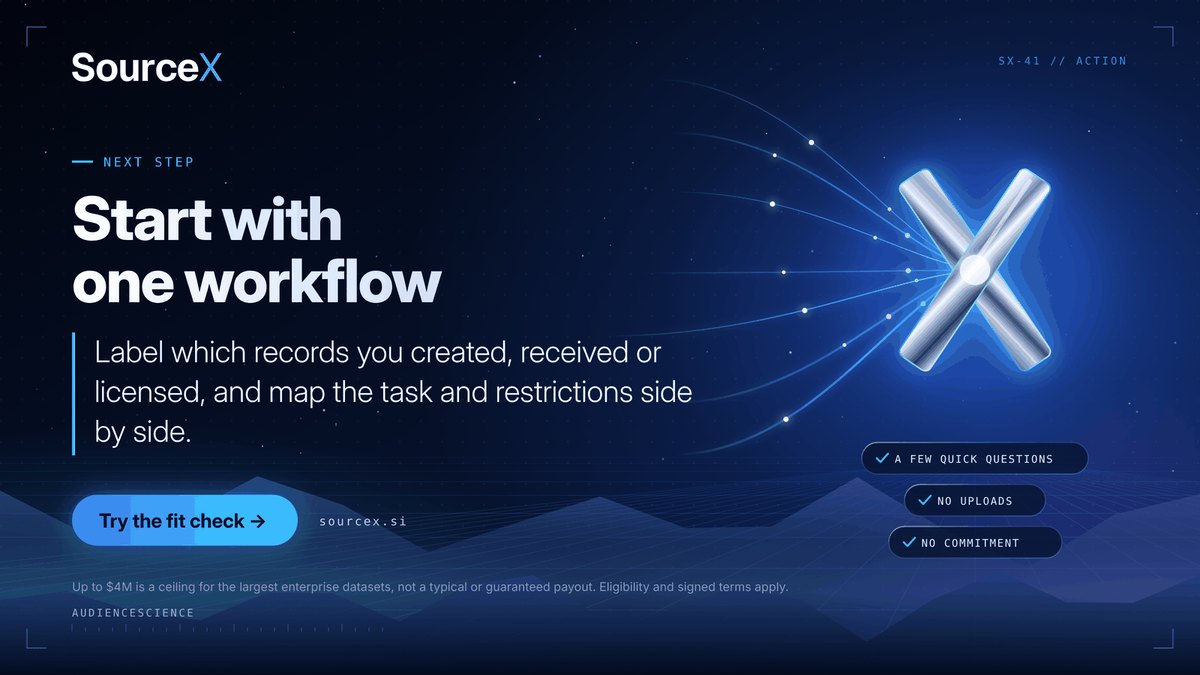
One mapped workflow turns a vague monetization question into an answerable one.
Take that map to the business owner authorized to decide. SourceX‘s company fit check can assess initial relevance without uploading customer records. A permitted marketing use should never be presented as permission for a different AI use.
About the founder
Noah Loul is a four-time founder and the founder and CEO of SourceX, which licenses business data directly from companies for AI training and evaluation. He previously founded B2B Rocket, acquired by Blackpearl Group. His work focuses on building permission-based data infrastructure for AI.