
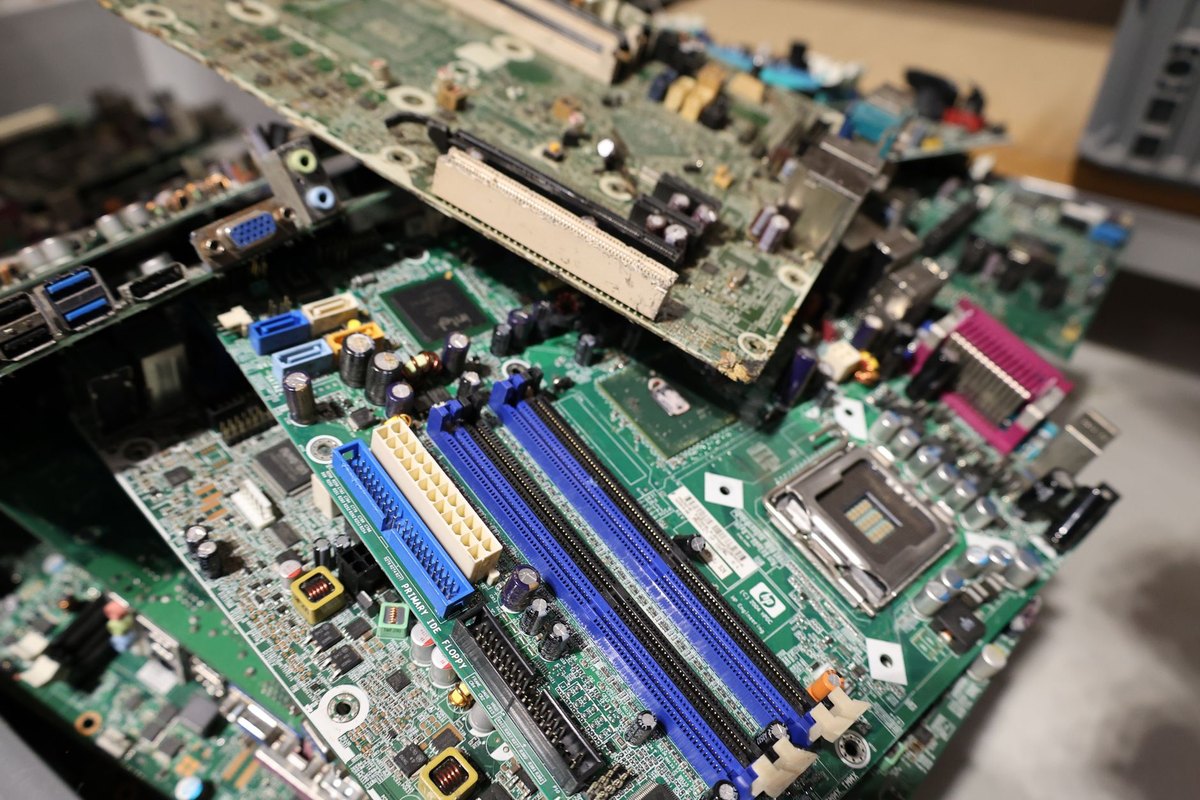
I have spent a lot of time around the end of the hardware lifecycle, the part that never makes it into the glossy resale brochures. Everyone wants to talk about what their old servers are worth. Far fewer people want to talk about the pallet in the corner that no buyer will touch: the failed drives, the ancient boxes, the proprietary kit with no aftermarket, and the mountain of cables, rails, and empty chassis every decommission produces.
That gear still has to go somewhere. And where it goes, handled by whom, is one of the most quietly important decisions in the whole process. Get it wrong and you have created two problems at once, an environmental one and a data security one. Get it right and it is a non-event. Here is what I have learned about doing it right.
In This Article:
Some of it genuinely has no resale value, and that is fine
First, a reality check. In any honest decommission, a chunk of the hardware is simply done. Not every server finds a second home, and pretending otherwise just delays the inevitable. Accepting that early is healthy, because it lets you aim your resale effort at the gear that deserves it and route the rest responsibly, instead of letting it rot in a storage room for two years “just in case.”
What I push back on is the next step people tend to take, which is to treat that end-of-life pile as worthless garbage and hand it to whoever quotes the cheapest pickup. That is where things go sideways.
Responsible recycling is not a wood chipper
The biggest misconception I run into is that recycling means feeding everything into a shredder and walking away with a bin of mixed scrap. Good recycling is far more deliberate than that. It works down a hierarchy, and value gets pulled out at each step.
The first pass is for anything still usable. Even in a batch headed for recycling, working components can be harvested rather than destroyed. After that comes real materials recovery, where metals, plastics, and circuit boards are separated and fed back into the supply chain as raw material. Only what genuinely cannot be recovered should end up as waste, and with a competent processor that final fraction is surprisingly small.
This is the whole argument for certified data center equipment recycling over a cheap haul-away. The cheap option makes your gear disappear. The proper one recovers what it can, keeps the rest out of a landfill, and can prove it did both.
The part that actually keeps me up at night
Here is the thing most people miss. A lot of the hardware headed for “recycling” still has data on it. Drives that were never wiped. Memory and boards with recoverable information. The assumption that it is junk, so the data does not matter, is exactly backwards. An uncertified operation might quietly resell or export those drives, and that is how a company ends up with a breach traced to equipment it thought it had thrown away years earlier.
A certified recycler treats every data-bearing device as a security risk first and scrap second. The data gets destroyed, with documentation, before any material moves downstream. If a recycler cannot clearly explain how they handle this, I would not let them near a loading dock.
How to tell a real recycler from a cheap hauler
The word “recycling” gets thrown around loosely, so I lean on a few questions. Are they certified to R2v3 or e-Stewards, and can they show the certificate? Do they destroy data in-house, or quietly pass your drives to a third party? Can they produce a chain of custody and tell you where the material actually ends up? Will they hand you a certificate of destruction and environmental documentation afterward?
Vague answers are the tell. A serious operation answers these without flinching, because this is simply how they work. If you are getting hand-waving instead, keep looking, because the gap between a certified recycler and a cheap hauler is tiny on the invoice and enormous in risk.
What you walk away with
Done properly, retiring the unsellable gear leaves you with more than an empty corner. You get a certificate of destruction for the data-bearing devices, a record of what was collected, and environmental documentation you can hand to whoever owns sustainability reporting. That last part matters more every year, as companies are increasingly asked to show that their retired electronics did not end up in a landfill or on a boat to somewhere with looser rules.
None of this is the exciting part of a hardware refresh. But it is the part that, handled badly, comes back to find you, and handled well, you never have to think about again.
FAQ
Does hardware with no resale value still need certified data destruction?
Yes. Value and data risk are separate issues. A worthless old drive can still hold recoverable data, so it needs the same certified destruction and documentation as anything else. Treating junk as automatically safe is a common and costly mistake.
What certifications should a recycler actually have?
R2v3 and e-Stewards are the main ones to look for. They set standards for how electronics are processed, how downstream vendors are vetted, and how data-bearing and hazardous material is handled. Ask to see the certificate, not just a claim on a website.
Isn’t the cheapest pickup fine for stuff I am throwing away anyway?
That is the thinking that causes problems. A cheap hauler may dump or export your gear, data and all, and leave the liability with you. Certified recycling costs a little more and removes that risk, with paperwork to prove it was done properly.