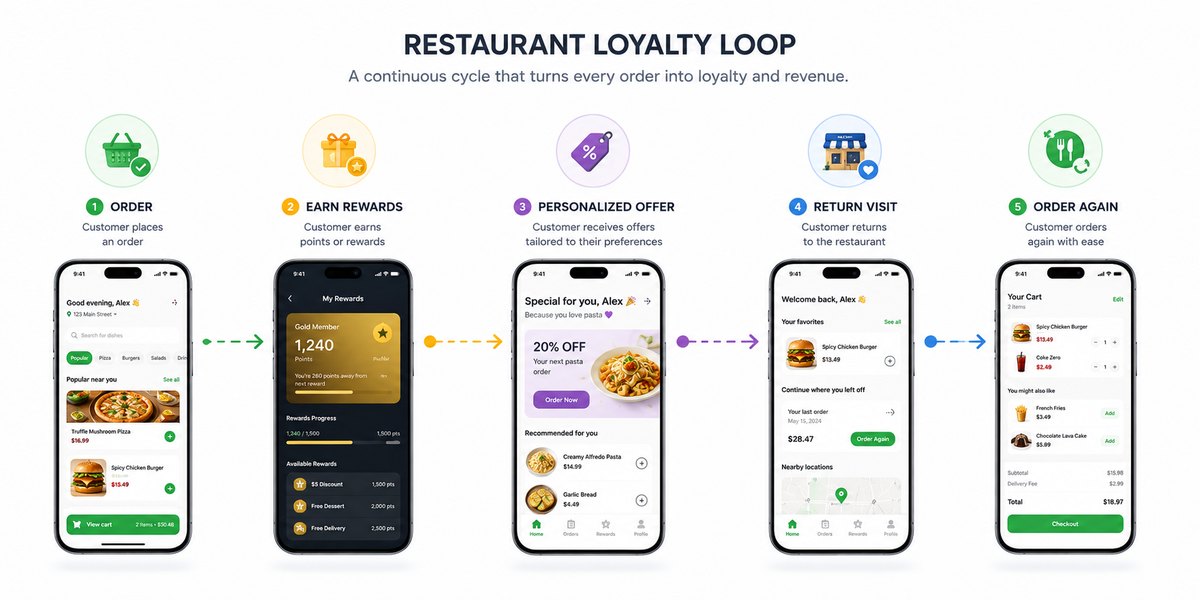
In most businesses, loyal customers are basically ignored – just sitting there, shrugging because no one bothered to make them feel like a priority. That is a missed opportunity nobody talks about, but everyone pays for. But they stop being random when you start paying attention to customer lifetime value.
This is exactly where we are pointing things next. You will see what customer lifetime value is and pick up practical ways to grow it with smart and simple strategies.
In This Article:
What Is Customer Lifetime Value (CLV)?
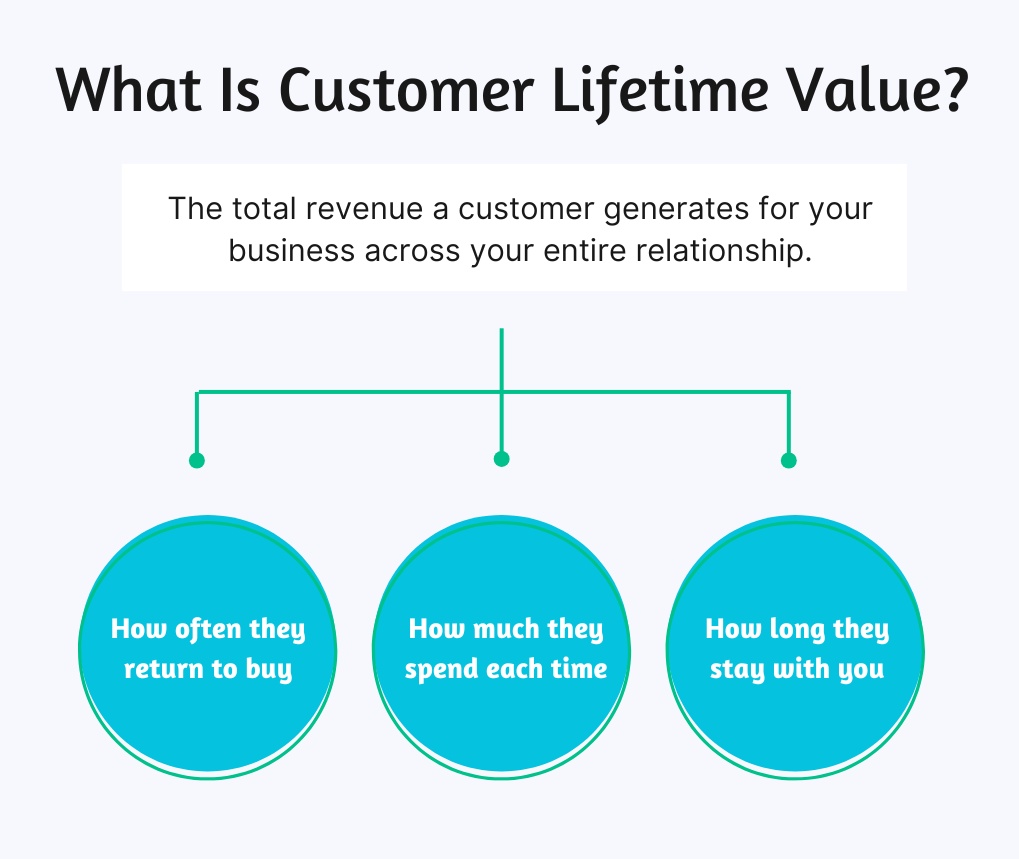
Customer lifetime value (CLV) is the total amount of money you expect a customer to spend with your business over the entire time they stay connected to you. CLV answers one simple question: “How valuable is this customer to my business over time?”
It combines:
- How often they buy
- How much they spend each time
- How long they stick around
How To Calculate Customer Lifetime Value
Before you measure customer lifetime value, you need three numbers:
1. Find Average Purchase Value
Average Purchase Value = Total Revenue ÷ Total Purchases
2. Find Purchase Frequency
Purchase Frequency = Total Purchases ÷ Number of Customers
3. Find Average Customer Lifespan
Estimate how long a typical customer keeps buying from you.
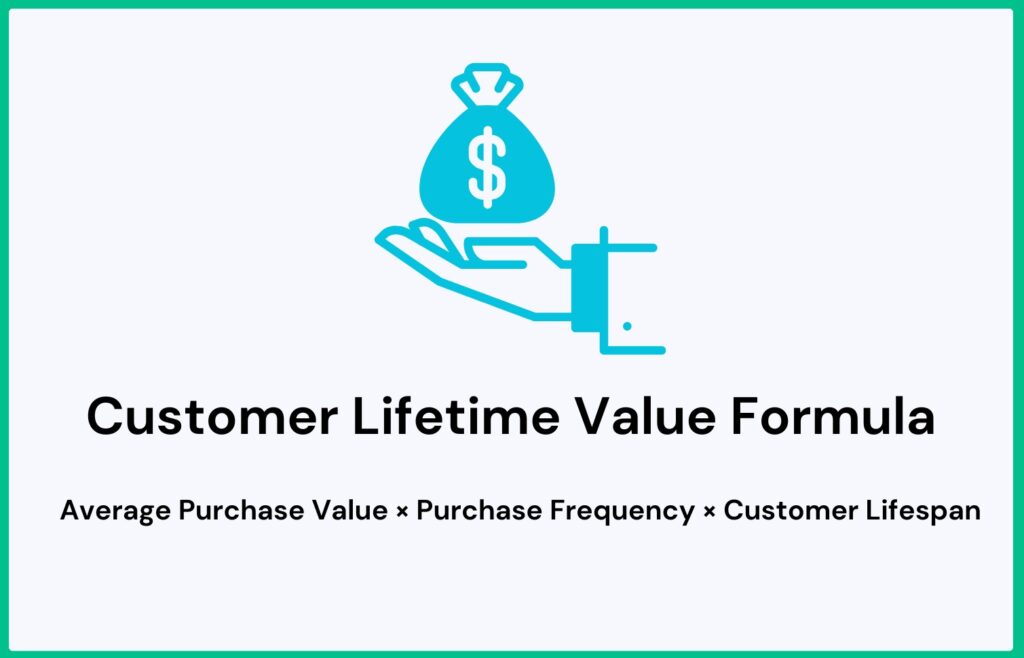
Customer Lifetime Value Formula
Now, let’s do customer lifetime value calculations.
CLV = Average Purchase Value × Purchase Frequency × Customer Lifespan
CLV vs LTV: Understanding The Key Differences
CLV and LTV sound similar, so they usually get mixed up without much thought. Here’s where they differ and why that matters when you are working on revenue.
| Customer Lifetime Value (CLV) | Lifetime Value (LTV) | |
| Definition Focus | Total value a customer relationship brings over time | Value from a customer or a segment |
| Scope | More strategic and customer-centric | Can be broader and sometimes used interchangeably with revenue metrics |
| Usage Context | Marketing and customer retention strategies | – Finance – SaaS – General business performance tracking |
| Precision | More detailed with segmentation and behavior insights | Can be simpler and less granular |
| Customer Segmentation | Frequently segmented by personas or behavior | May or may not include segmentation |
| Data Inputs | – Customer retention rate- Average purchase frequency rate- Customer lifespan | Focus on customer revenue and average purchase value |
| Goal Alignment | Helps improve long-term customer relationships and loyalty | Helps estimate the overall revenue potential per customer |
| Time Perspective | Long-term engagement and repeat behavior | Can be short-term or long-term – depending on usage |
| Strategic Role | Helps with decisions in – Retention – Personalization – CX | Supports financial forecasting and growth projections |
Why Customer Lifetime Value Should Be A Priority: 5 Key Benefits
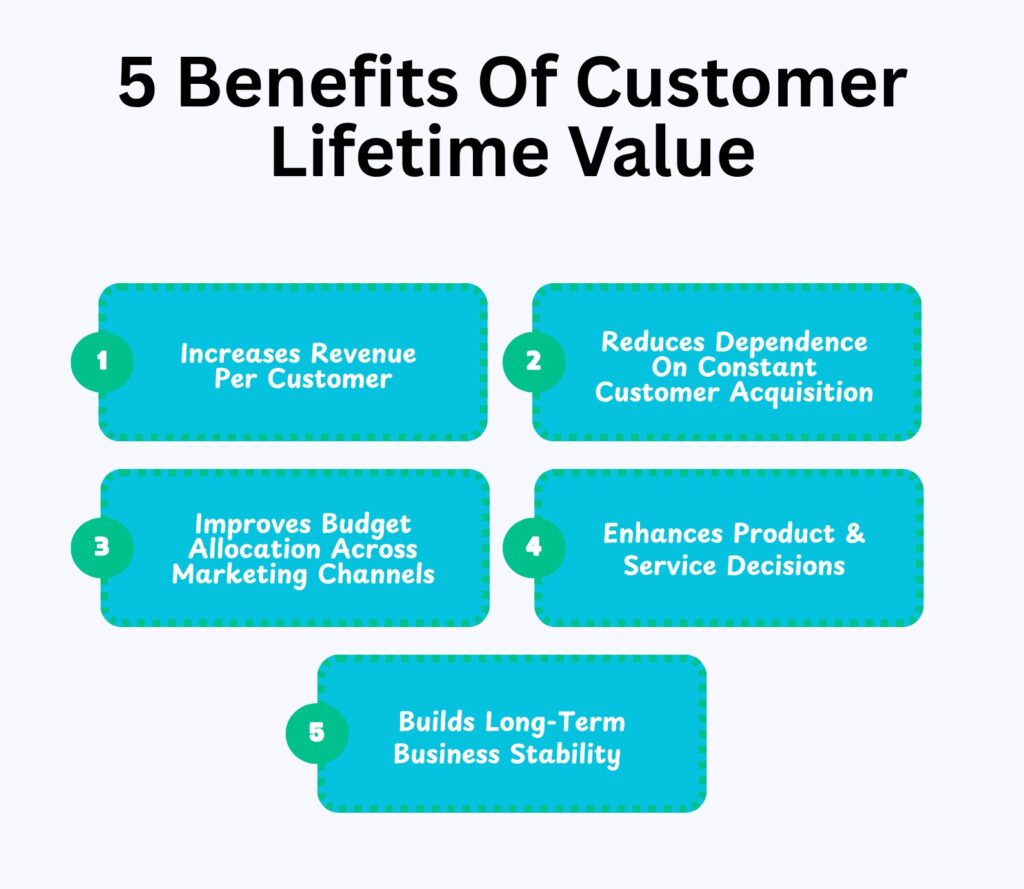
Here are five benefits that show exactly why customer lifetime value deserves your attention.
1. Increases Revenue Per Customer
Here’s something people don’t say enough: the easiest person to sell to… is someone who already bought from you. No convincing needed.
When you focus on lifetime value, you naturally start asking what else this person would find useful. And weirdly, customers like that. Because instead of feeling sold to, they feel understood.
So gross margins and average revenue don’t grow because you are pushing harder. It grows because customer satisfaction is increasing and the relationship is getting deeper.
2. Reduces Dependence On Constant Customer Acquisition
If your entire business depends on new customers every single day… that is stressful. Like, “if ads stop working this week, we are in trouble” kind of stressful.
But when people come back on their own, that pressure eases up and brings down the customer acquisition cost. You are not waking up every morning thinking where are we going to find more people today. Instead, you have got momentum. Some sales just… happen. It is the difference between chasing and being chosen.
3. Improves Budget Allocation Across Marketing Channels
Most businesses spend big on marketing efforts without really knowing what will work. CLV makes you a bit more… picky (in a good way). When you know how much a customer is worth over time, you can:
– Justify spending more on channels that bring high-value customers
– Cut back on sources that bring one-time buyers who never return
– Focus on the quality of customers – not just quantity
Because, honestly, cheap customers who disappear are not that useful. But slightly more expensive customers who stick around for months are where the real return is. CLV helps you see that difference clearly.
4. Enhances Product & Service Decisions Using Customer Insights
When you look at existing customers over time, you start noticing things you would completely miss otherwise. Like:
– Who quietly keeps buying without needing reminders
– What people come back for again and again
– Where people lose interest without saying anything
And those little signals you get from analyzing customer journey are incredibly honest. So instead of brainstorming in a room, thinking, “What do customers want?” you are more like, “Oh… they have been showing us this the whole time.” That leads to decisions that are less risky – and way more steady.
5. Builds Long-Term Business Stability Through Predictable Income
This one feels different once you experience it. There is a huge difference between hoping to hit your numbers this month and already knowing that a portion of revenue is coming in. When customers stay, your income stops being so… unpredictable. You can now actually plan.
And that changes how you run everything:
– You take smarter risks
– You stop overcorrecting every dip
– You build with patience instead of urgency
It is not flashy. But it is stable.
How To Increase Customer Lifetime Value: 8 Proven Strategies

Let’s get into 8 strategies you can start using right away to achieve higher customer lifetime value figures.
1. Fix Onboarding Drop-Off Points To Secure The First Purchase
Most businesses obsess over getting signups… and then completely ignore what happens right after. But here’s the thing: the real battle is between signup and first purchase. That gap is where people disappear.
Onboarding is about removing hesitation fast. Confusion, too many steps, unclear value – any of these will kill momentum. And your job is to protect that initial momentum like it is fragile – because it is.
What To Do:
- Watch 10–15 actual session recordings of new users and note the exact second they pause or start jumping between pages – that is confusion
- Replace your homepage for new users with a stripped-down version that only pushes one action (not your full catalog, not your story)
- Add a “you’re 1 step away” progress indicator during checkout – people complete things they feel are almost done
- Send a non-salesy message after signup that answers one question only: “What do people usually do first here?”
2. Introduce Tiered Loyalty Programs That Reward Continued Spend
Basic customer loyalty programs are boring: “Spend money, get points.” Nobody feels anything.
Tiered systems, though – they tap into progress. People like unlocking levels – it is oddly motivating. The trick is to make customers feel like they are moving up – not just collecting crumbs.
What To Do:
- Name tiers in a way that shows identity. Not “Silver/Gold” but something tied to your brand’s niche
- Show a live progress bar in their account and inside emails – don’t make them go looking for it
- Offer one benefit that saves time (priority processing, faster support), not just money
- Drop a small but unexpected perk right before they reach the next tier. It pushes them to complete the jump
3. Use Behavioral Data To Send Precisely Timed Offers
Timing matters more than the offer itself. A great deal sent to the right customer segment at the wrong moment gets ignored. A decent one sent at the perfect moment gets acted on instantly. Rather than blasting campaigns, you want to respond to behavior. Someone who checks the same product 3 nights in a row isn’t “browsing” – they are deciding. And that is your window.
What To Do:
- Set up alerts for “repeat hesitation” (same product viewed multiple times across days) and trigger a message that answers a likely concern – not just a discount
- Track time gaps between purchases for repeat buyers and act before their usual return window passes
- Send offers when behavior slows down, not when it spikes. Momentum doesn’t need help; hesitation does
- Use different tones for different customer behaviors (curious vs. inactive vs. almost-buying) instead of one generic campaign voice
4. Expand Average Order Value With Strategic Upselling & Bundling
Upselling gets a bad reputation because it is usually done badly – random suggestions that are forced. Done right, it feels helpful. Like, “Oh, that actually makes sense to add.” The key is relevance and timing – not pushing more, but suggesting smarter.
What To Do:
- Only show add-ons that solve a known next problem (not random “popular items”)
- Place bundles where decisions are already being made – cart, not homepage
- Use phrasing like “Most people forget this part” instead of “You may also like”
- Limit choices to 2–3 max. Too many options kill the add-on decision completely
5. Launch Subscription Models To Create Recurring Revenue Streams
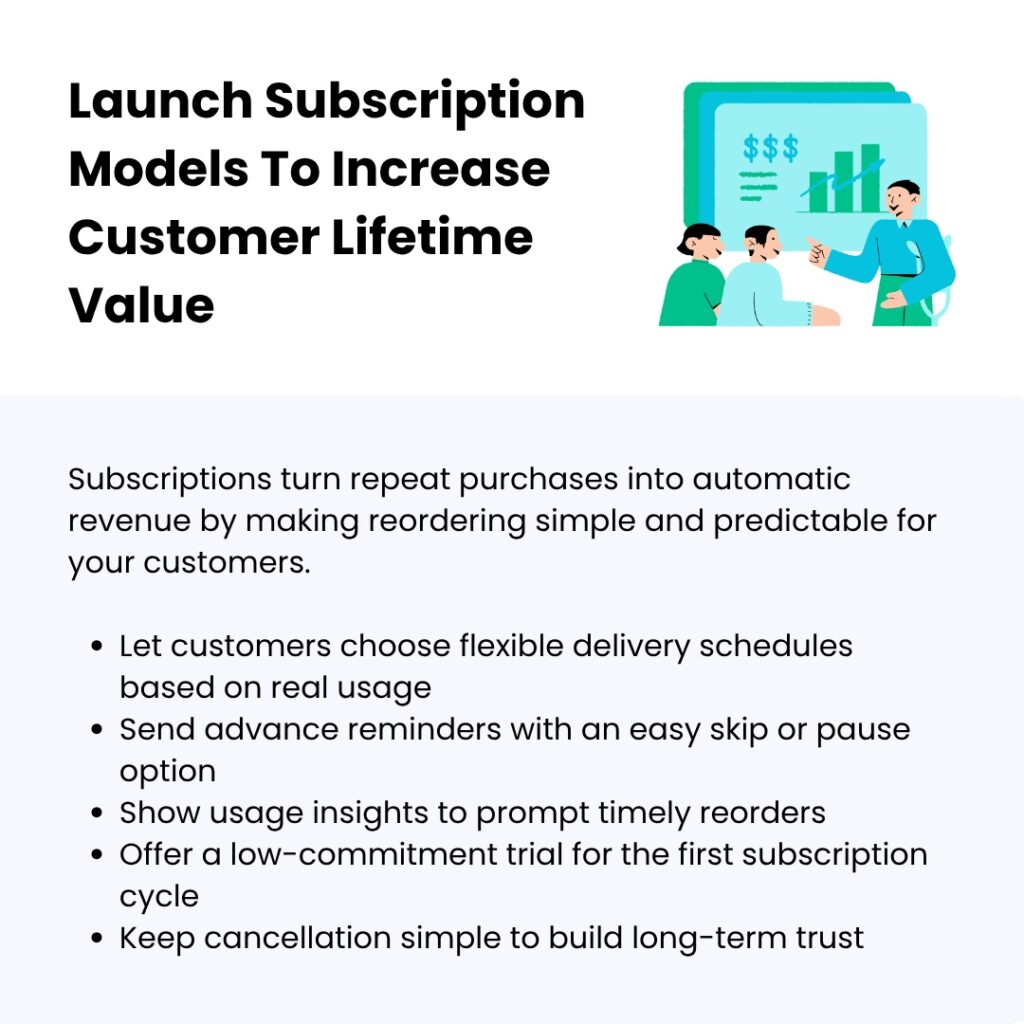
Subscriptions aren’t just for SaaS anymore. If people need something regularly, they would rather not think about it every time. But subscriptions only work when they remove friction – not when they trap people. The goal is convenience throughout the entire customer lifecycle.
What To Do:
- Encourage customers to set weird, real-life schedules (like every 5 weeks, not just monthly)
- Send a “heads up” before every charge with a one-click skip – this builds trust more than any discount
- Show them their past usage (“You’re about to run out”) rather than pushing the subscription upfront
- Offer a “try subscription for one cycle” option instead of forcing a long-term decision immediately
6. Build Proactive Customer Support That Resolves Issues Early
Most support systems are reactive. Customers complain, then you respond. But if a customer has to reach out, they have already felt friction long enough to act on it. That is not where you want to be. You have to identify issues before they turn into complaints. Reactive support is damage control. Proactive customer support is relationship protection. The difference is timing.
What To Do:
- Flag orders that are taking longer than usual, and send a message before the customer even notices
- Reach out after first-time usage with a simple “Did anything feel unclear?” instead of waiting for confusion to turn into churn
- Track repeat contacts from the same user. That is not bad luck. That is a broken customer experience
- Give your customer success team permission to fix things instantly (refund, replace, resolve) without escalation delays
7. Identify At-Risk Customers Early & Run Personalized Win-Back Email Campaigns
Most valuable customers don’t leave with a dramatic exit. They just… stop showing up. No complaint. No warning. Just silence. But before that silence, there is always a pattern shift. Slower clicks. Fewer visits. Longer gaps.
The goal is to catch that slow fade through personalized win-back emails with well-structured dynamic content. A customer who skipped three emails should see a very different message than someone who browsed yesterday but didn’t convert.
Timing, messaging, offer structure – they all should shift automatically based on engagement data. Dynamic content keeps every touchpoint relevant at scale. In fact, dynamic content for personalized email marketing campaigns raises ROI by 258%.
What To Do:
- Define “normal behavior” per customer (not globally), then flag when they deviate from their own pattern
- Segment customers based on historical data and create a separate communication trackjust for them. Don’t mix them with active campaigns
- Use messaging that acknowledges distance (“Haven’t seen you around lately”) instead of pretending everything’s normal
- Bring them back with relevance (something they previously engaged with), not broad offers
8. Align Pricing Strategies With Long-Term Customer Value Segments
Here’s a mistake a lot of businesses make: they price for the average customer. But the average customer doesn’t really exist. You have people who explore. People who commit. People who invest deeply. And they shouldn’t all be treated the same.
What To Do:
- Identify your “low-effort” customers (frequent, decisive buyers) and offer them premium options instead of discounts
- Create pricing structures that reward consistency (like better rates after repeated purchases)
- Avoid sending discounts to everyone. Some customers would have paid full price without saying a word
- Test pricing changes on specific segments first and track long-term retention – not just immediate sales
5 Real-World Examples Of Businesses That Maximized Customer Lifetime Value With Smart Strategies
These companies figured out how to keep customers coming back without forcing it. Let’s look at 5 real-life examples where smart business strategies made average customer value soar.
1. Golf Cart Tire Supply
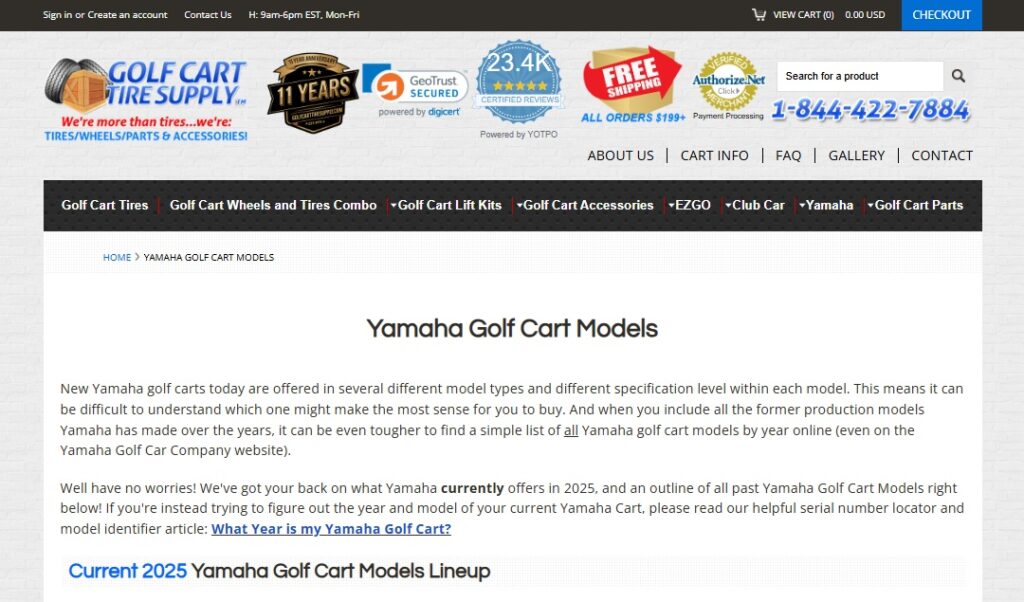
Most people who visit a site selling golf cart tires are confused. They don’t know their model. They don’t know compatibility. They don’t even know what size they need. Golf Cart Tire Supply turned that confusion into an advantage.
They built highly detailed model-specific guides, like their Yamaha golf cart model breakdown. Instead of pushing products immediately, they helped customers figure out exactly what they owned. That single shift changed how people interacted with the brand.
What They Did Differently:
- Created model-specific landing pages that matched search intent perfectly
- Added compatibility breakdowns for tires, lift kits, and accessories
- Included visual identifiers so users could confirm their cart without guessing
- Placed product recommendations only after clarity was established
Results:
- Average session duration jumped from 2.1 minutes to 5.8 minutes
- Conversion rate on first-time visitors increased by 34%
- Repeat purchase rate grew from 18% to 41% within 9 months
But the real CLV boost came after the first sale. Once a customer identified their cart, Golf Cart Tire Supply stored that data. Every retargeting ad and product suggestion became extremely relevant.
Why This Worked:
You reduce friction early, then you reuse that data forever. That is how one purchase turns into five.
2. Sewing Parts Online
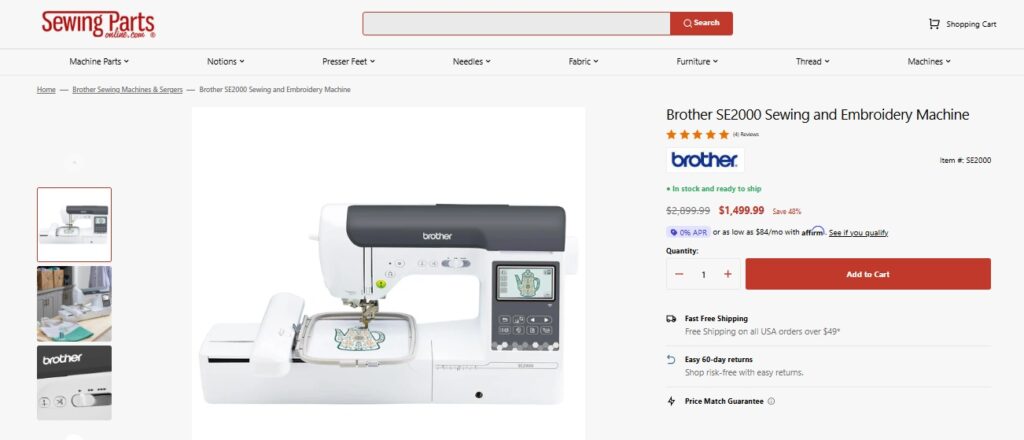
Selling sewing machines can easily become a one-time transaction. Someone buys a machine and disappears for years. Sewing Parts Online approached it differently. Rather than focusing only on products, they built a content layer around skill-building.
What They Did Differently:
- Added beginner-friendly walkthroughs for complex machines
- Created step-by-step tutorials for embroidery projects
- Included video breakdowns showing real usage scenarios
- Built bundles that matched skill levels rather than just product categories
Once someone bought a machine, the relationship expanded. They started sending:
- Weekly project ideas using the exact machine purchased
- Email sequences based on skill progression
- Recommended add-ons tied to completed projects
Results:
- Customers who engaged with tutorials spent 2.7x more over 12 months
- Add-on product attachment rate increased by 46%
- Email-driven repeat purchases contributed to 38% of total revenue
One specific case stood out.
A beginner customer bought a $699 machine. Over the next year, through guided emails and tutorials, they purchased $180 worth of thread kits, $220 in embroidery accessories, and $95 in replacement parts. Total customer value: $1,194 from a single initial purchase.
Why This Worked:
They made progress feel easy. When customers feel progress, they stay engaged. When they stay engaged, they keep buying.
3. SocialPlug

SocialPlug operates in a niche where purchases are usually small but frequent. Rather than pushing large one-time packages, they leaned into repeat behavior. Their TikTok coin offerings are structured in a way that encourages ongoing usage.
What They Did Differently:
- Offered smaller and low-friction purchase options instead of bulk-only pricing
- Introduced limited-time bonuses for repeat buyers
- Created urgency through time-based deals
- Simplified checkout to reduce drop-off for repeat purchases
They also tracked user behavior closely. If someone bought coins twice within a week, they were flagged as a high-frequency user. That triggered exclusive discount offers and loyalty-based pricing tiers
Results:
- Purchase frequency increased from 1.3 orders/month to 3.1 orders/month
- Average annual spend per user grew by 68%
- Returning customer revenue share increased to 72%
Why This Worked:
They optimized for frequency instead of size. Small, repeatable purchases add up faster than occasional big ones.
4. Pergola Kits USA
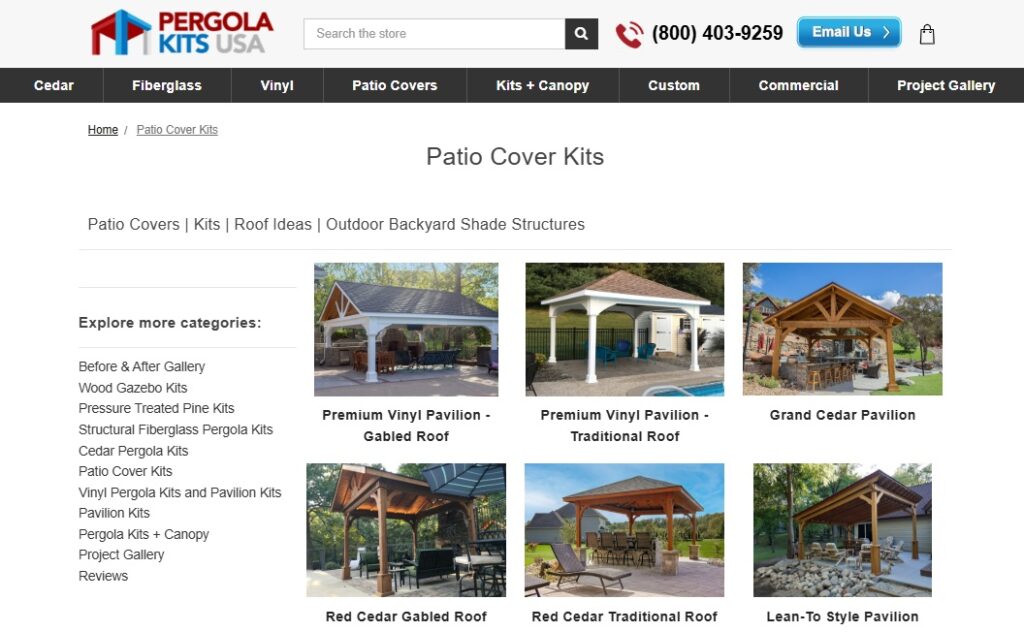
Pergola Kits USA sells high-ticket items. Once someone buys a patio cover kit, the natural assumption is that the journey ends there. They challenged that assumption by treating the pergola as the starting point of a larger outdoor transformation.
What They Did Differently:
- Introduced post-purchase design consultations
- Suggested add-ons like privacy panels and shade systems
- Shared real customer project galleries for inspiration
- Offered phased upgrade plans instead of one-time upsells
They also timed their offers carefully. Instead of pushing everything upfront, they spaced recommendations.
Results:
- 57% of customers purchased at least one add-on within 90 days
- Average order value increased by 38% over the customer lifecycle
- Referral rate improved by 22% due to completed “full projects”
One homeowner started with a $4,800 pergola kit. Over 6 months, they added a $1,200 lighting system, $900 privacy screens, and $1,600 outdoor furniture. Total value: $8,500 from one initial purchase.
Why This Worked:
They didn’t treat the sale as complete. They extended the story. When customers see a bigger vision, they keep investing in it.
5. John Campbell Hilton Head Real Estate Agent

Real estate is one of the clearest examples of high lifetime value potential. One client can generate multiple deals over the years if handled correctly. John Campbell focused on staying relevant long after the initial purchase. His Hilton Head Island neighborhood pages are designed to educate, but the real CLV strategy happens after the deal closes.
What They Did Differently:
- Maintained ongoing communication with past clients
- Shared local market updates tailored to specific neighborhoods
- Provided property value tracking over time
- Offered relocation and investment advice
He also segmented his audience:
- Primary homeowners received lifestyle-focused updates
- Investors received ROI and rental performance insights
- Sellers received timing recommendations based on market trends
Results:
- 64% of his clients returned for a second transaction within 5 years
- Referral-based deals accounted for 52% of the total business
- Average client value increased from $18,000 commission to $46,000 over time
Why This Worked:
He stayed present. When clients think about real estate again, they already know who to call.
Conclusion
Customer lifetime value ends up being the clearest signal of how well your business actually runs. And you need to build it through every customer interaction. So focus on what keeps customers active. Stay close to their behavior. Adjust faster. Fix the points where they lose momentum. Make it easier for them to come back and stay longer.
At AudienceScience, we focus on helping you improve customer lifetime value and turn it into something you can actually act on. We give you full control over your customer data, so you are not relying on fragmented tools or outside platforms to understand your customer base.
You can build your own audience segments using both online and offline data, then activate them across channels with precision. We also make sure every dollar you spend works harder. Our platform lets you manage and optimize media buying in real time, with clear visibility into where your budget goes and what it returns.
Get started with AudienceScience today.