We’re officially in the AI era. And the pace of progress is hard to ignore. AI search isn’t only changing how people look for answers, but also how they think and what they expect when searching.
Tools powered by LLMs don’t just show the usual ten results on the first page like traditional search engines. Instead, they generate conversational answers. And if you are a brand, one of your biggest concerns should be to get mentioned and cited in those answers.
That’s where digital PR for AI search can become your best growth strategy. In this article, we’ll see how different it is compared to traditional PR methods and how you can use it to earn more visibility, trust, and authority.
In This Article:
Why do you need digital PR for AI search?
To understand why you need digital PR for AI search visibility, we need to understand how AI search works in the first place. Of course, it’s a complex technology, but it comes down to:
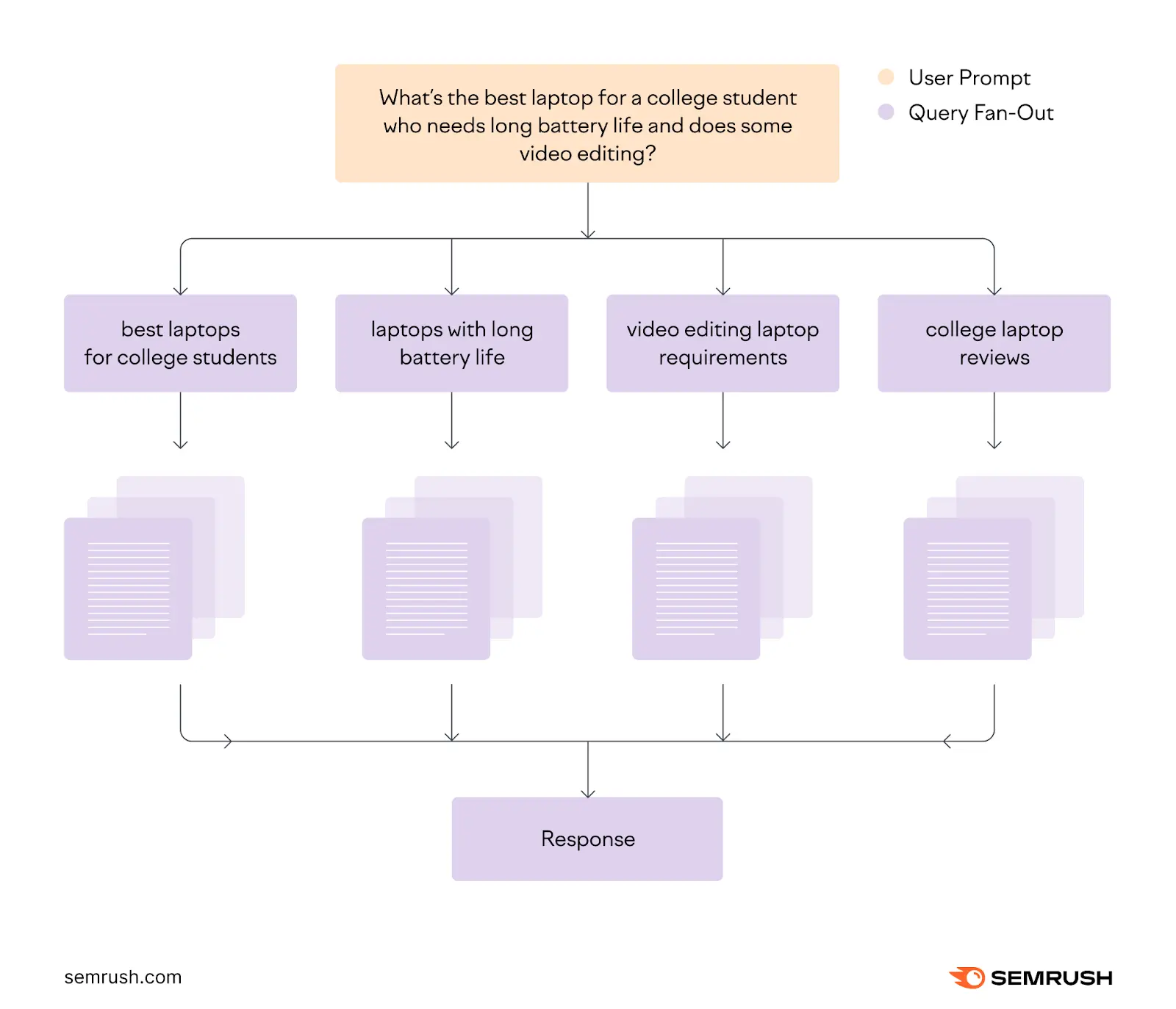
- Splitting each query into multiple related questions (this process is called query fan-out),
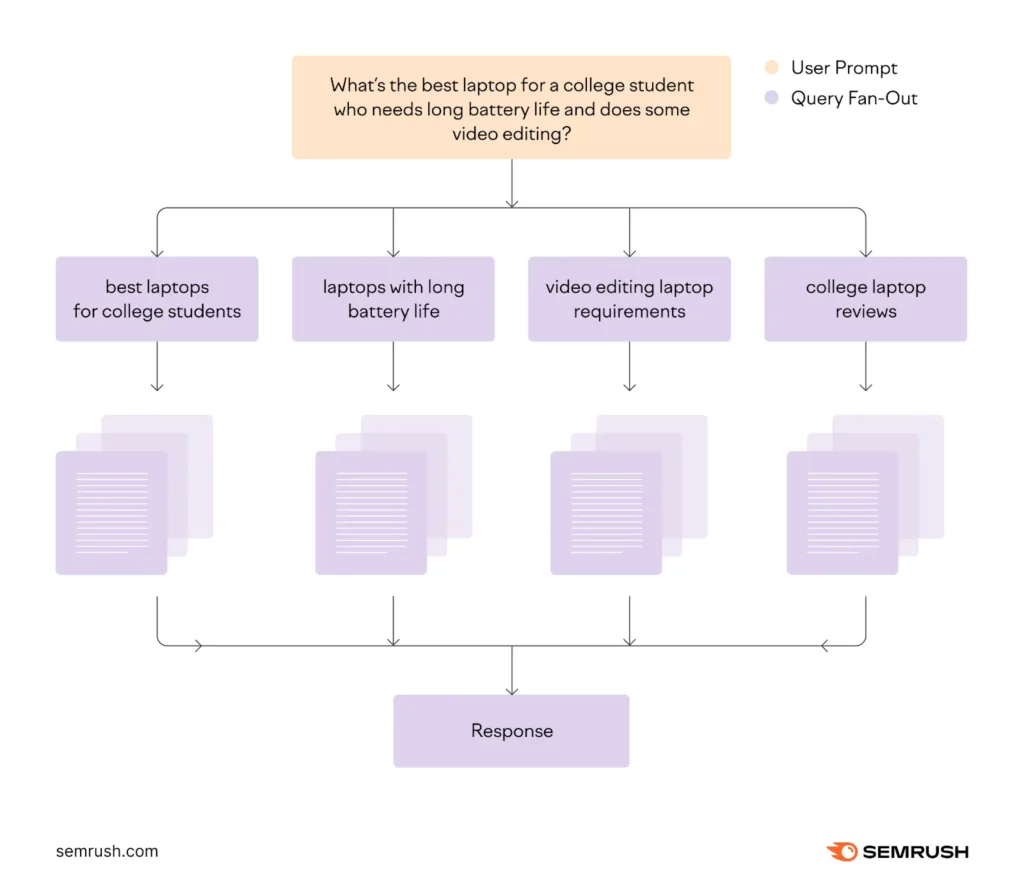
- Gathering all the information it can find from relevant and trusted sources,
- And then, synthesizing that information into one conversational answer.
Sometimes, AI will cite sources with a link. Sometimes, just mention brands without linking to them. And sometimes, it won’t even mention a brand it analyzed (usually, when it isn’t central to the final answer).
That means a few very important things:
- Even if your business was relying on organic traffic, ranking in the top 5 for your major keywords, it is not enough anymore.
- Having strong backlinks is good, but you need more than that.
- Even a high domain authority is only partly valuable.
What matters now is whether your brand appears in reliable and relevant sources that AI systems can pull data from. This basically changes digital marketing as we know it.
Digital PR was important before, without any doubt. Yet, now it becomes absolutely essential, as it can make you visible to AI systems or just leave you in the dark. Why? Because it offers three elements: brand visibility, trust, and authority.
Let’s see what each of these means.
Brand visibility
The more your brand appears across reputable platforms, the more likely it is to show up in AI-generated responses. How does it work, though? So, AI is scanning the web, looking for sources from very different parts of the internet.
And very often, it will mention your brand based on a publication on another website.
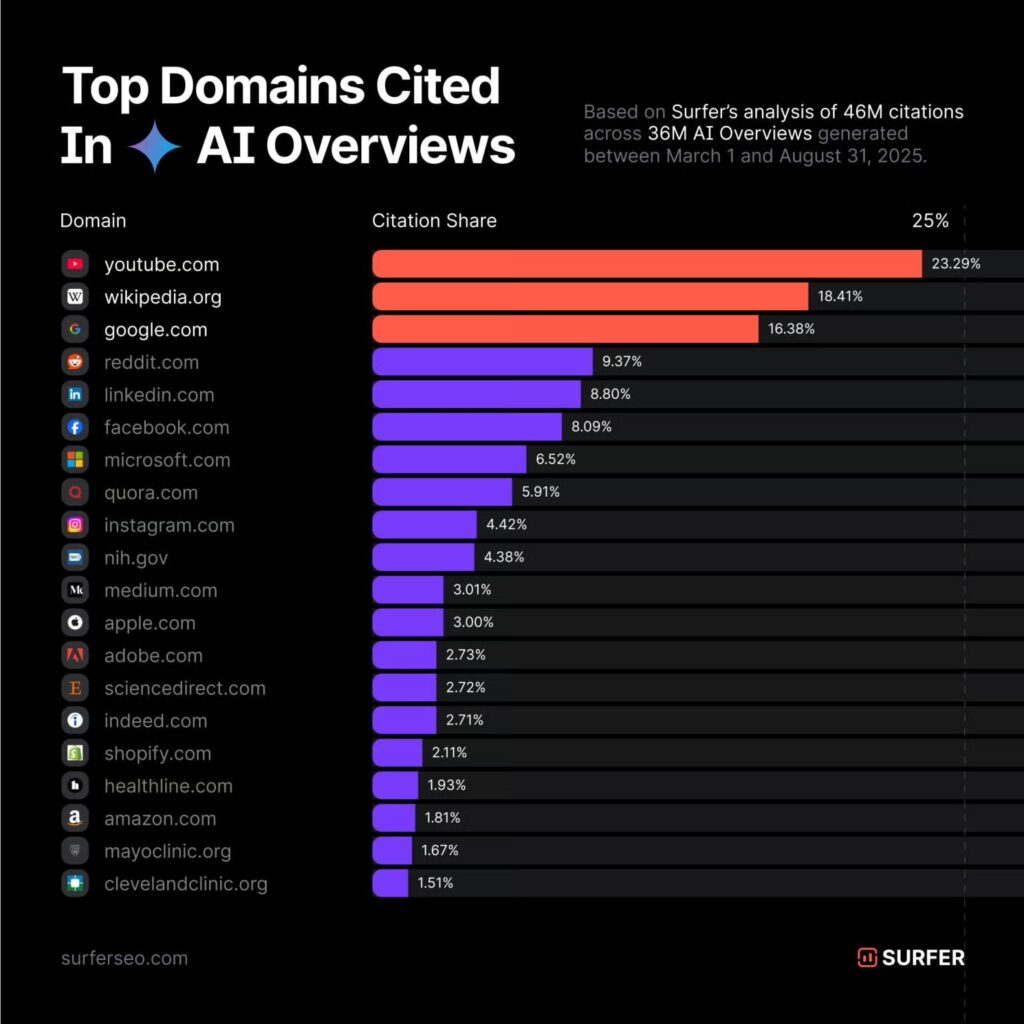
This is why cross-site publishing is so important, whether those are sponsored blog posts, press releases, mentions on Reddit and Quora, or your product/service reviews on some industry web pages.
Even if it is just something short, like your expert commentary, this increases your chances of being cited. Especially when you focus on websites that are cited the most in AI Overviews and LLMs.
Trust
Not all mentions are helpful when it comes to establishing trust. Some might not leave a good trace. For starters, you can’t spam your way into credibility. AI systems are surprisingly good at detecting low-quality signals.
So, as much as you can avoid irrelevant, even merely spammy-looking sources.
If you damage your trust once with these, it might be very hard to restore it. So, focus on high-value resources: mentions in industry publications, expert content, interviews, relevant “best services/products” lists, etc.
After all, trust comes from your brand being part of meaningful conversations in the industry.
Authority
Your brand authority in the AI era matters much more than your DR. Yes, traditional topical authority and SEO metrics still matter. But now you also need a so-called “distributed authority,” built across the entire web.
Think about it this way:
- Does your brand appear in multiple credible sources?
- Is it associated with specific topics again and again?
- Do others quote you?
- Do you publish original research?
- Do industry experts mention your work?
You can’t build authority that doesn’t go beyond your own website. If you want to achieve brand visibility across AI search, rankings are not what you should be chasing. Your goal should be to become part of the knowledge base that AI systems rely on.
So, instead of focusing on random PR or SEO tactics, look at it as a system that helps you build your brand reputation.
How to use digital PR for AEO
Answer Engine Optimization (or AEO) is the next level of SEO. Here, you aren’t trying to rank higher in search results. You’re aiming to be included in AI-generated answers.
For B2B teams, Directive Communications connects PR, B2B Influencer, Organic Social, and Paid Social into a coordinated communications system. The aim is not visibility for its own sake, but credible third-party context—earned media, practitioner validation, executive perspectives, and social proof—that can shape how buyers and AI systems understand a brand before a sales conversatio
And yes, smart digital PR campaigns are one of your main tools to achieve that. These are some of the most effective tactics you can use:
1. Get more relevant brand mentions
Relevance is more important than volume. That’s a new axiom we have to keep in mind.
There’s no need to chase dozens of random placements. All you need is a few high-quality, relevant mentions. For example:
- If you’re a fintech brand, you should appear in the compilations with the best fintech tools.
- If you’re a SaaS company, you should show up in SaaS-related thought leadership content.
As simple as that. This will strengthen your topical authority, and that’s exactly what you need to “convince” AI that you are worthy of being mentioned.
Ask yourself:
- What does my target audience read?
- Where do experts in my niche contribute?
- What sites regularly publish relevant industry analysis?
Then, build relationships with names that pop up in your answers above.
2. Use different channels
AI models pull from diverse sources. That’s why they are always looking for more than just your website and some other blogs.
When it comes to your digital PR campaigns, diversify. You need more than just publications on industry resources. You also need news sites, community discussions (very helpful), podcasts, YouTube videos, etc. Everything is important, as long as it’s relevant.
The broader your publication base is, the stronger your presence in AI-generated outputs will be. Such diversity also helps build resilience. So, if one channel fades, others will keep working for your AI visibility.
3. Don’t ignore unlinked mentions
This is really good news. Before, if you wanted visibility in search, you needed to get backlinks. And let’s face it, guest post pricing is sometimes really steep.
But in the AI era, even unlinked brand mentions count. If your brand is repeatedly mentioned in relevant articles, forums, Reddit threads, etc., AI treats it as a positive signal. It starts trusting your brand.
The thing is that AI models don’t need hyperlinks the way search engines do. What they need is clear associations. So, don’t obsess over links, and focus on diverse and relevant brand mentions, even if they are unlinked or nofollow.
4. Avoid generic press releases
Generic press releases are one of the weakest spots in modern digital PR for AI search. You know the type:
- “Company X launches a new feature.”
- “Startup Y announces a strategic partnership.”
- “Brand Z attends a conference.”
They’re technically “news,” but they don’t add real value. They are just announcements that don’t really affect anything we discuss in this article. Therefore, AI won’t care much about you being there.
If you want AI systems to reference you, give them something quotable. For example:
- Contrarian takes on industry trends,
- Clear frameworks or models,
- Specific predictions and original research,
- Sharp insights supported by experience.
A bland CEO quote like “We are excited about this new chapter” will never build authority. But an informed perspective might.
If your press release doesn’t really give any relevant details that people might actually want to google, it probably won’t help your AI visibility.
5. Focus on citable content
This ties back to the previous point. AI search tools want to give users answers that are actually reliable. And they are often built on:
- Statistics,
- Case studies,
- Research findings,
- White papers, etc.
In other words, everything that has data AI can use for citations. So, if your brand publishes research that gets picked up by reputable sites, AI will see that.
Soon, that will make you more likely to be associated with a certain topic. And as a result, you’ll get more chances of being quoted when that topic comes up.
Conclusion
AI search is reshaping how people discover and trust brands. That’s why it’s important to make sure you know how digital PR for AEO works and act accordingly.
In a world powered by LLMs, visibility does not only mean traffic. It’s the presence of your brand in the broader conversation and relevant context. And that’s the presence you can actually influence and build by yourself.