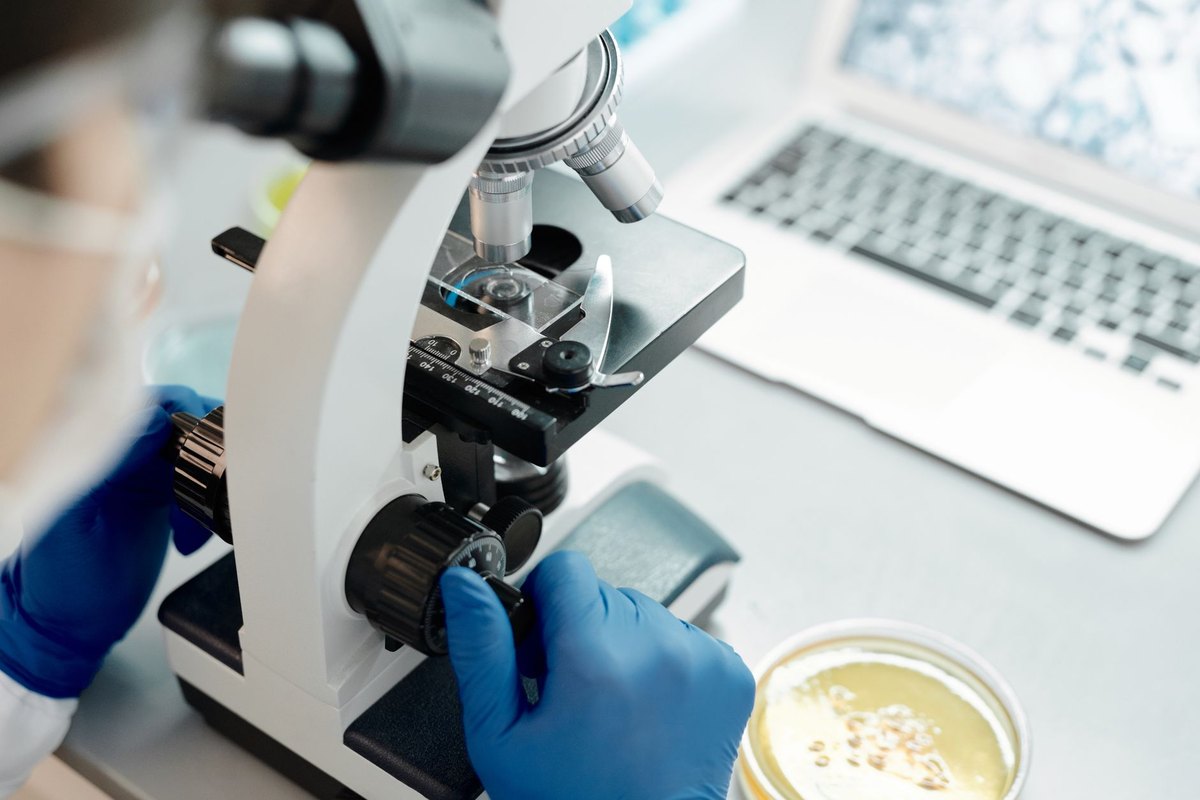
For decades, the standard lab experiment followed a simple pattern. Set up the assay, wait a set number of hours or days, take one measurement, and interpret the result. That approach produced a lot of useful science, and it still has a place. It also leaves a gap in the middle of every experiment, and more teams are deciding they no longer want to work around it.
Real-time monitoring fills that gap by recording what cells are doing throughout the experiment instead of only at the end. The shift affects how quickly a team can act, how much it can trust its results, and how much material it uses along the way.
In This Article:
What endpoint testing leaves out
An endpoint assay gives you a single data point. If a compound reduced cell viability by 40 percent at 48 hours, you know the outcome but not the path. Did the cells respond within the first two hours and then recover? Did nothing happen until hour 36, when the culture collapsed? Both stories can produce the same number at the same timepoint.
Endpoint methods also tend to be destructive. Many require lysing cells, adding dyes, or fixing samples, which means each timepoint needs its own set of wells. A team that wants to see how a response develops over time has to plan for more plates, more reagent, and more hands-on work. Every added step is another chance for variation between wells and between operators.
How continuous monitoring changes the workflow
Labs that once waited days for endpoint results now use a real-time cell analysis instrument to watch cell behavior as it happens. Readings come in on a schedule the team sets, and the same wells are measured again and again without being disturbed. The result is a curve instead of a single number.
That curve changes how experiments run day to day. Researchers look at data while the experiment is still underway, rather than waiting for a scheduled readout.
Faster decisions
When a response shows up in the first few hours, there is no reason to hold the plate for another two days. A team can end a failing experiment early, adjust a dose, or start the next round sooner. Over a project with dozens of conditions, that time adds up. Timing also becomes a variable you can study. The point at which a compound starts to act is often as informative as the size of the final effect.
Better data quality
Measuring the same sample repeatedly removes the well-to-well variation that comes from splitting a sample across several timepoints. It also makes problems easier to spot. A contaminated well, a plating error, or an unusual drift in baseline shows up as an odd trace on the curve, while in an endpoint assay the same problem may only look like an outlier in a table of numbers. Teams that review traces as they develop can flag and rerun a questionable sample before it affects a conclusion.
What labs need to consider before switching
Moving to continuous data collection is less about replacing every assay and more about choosing where it adds the most value. A few questions help narrow that down:
- Which experiments depend on timing, such as dose response studies, cytotoxicity screens, and cell migration work?
- Where do repeat runs cost the most in cells, reagents, or staff hours?
- How will the lab store and review a larger volume of time-series data?
- Who needs training to read kinetic curves instead of single values?
Data handling deserves early attention. A continuous readout produces far more data points per well than an endpoint assay, and a team without a plan for naming, storage, and review can end up with files nobody uses. Setting conventions at the start keeps the data usable when a project ends and someone else needs to revisit it.
Common concerns about real-time methods
Cost is the first objection most labs raise. An instrument is a larger upfront purchase than a reagent kit for a plate reader, but the math looks different once repeat runs, extra plates, and idle days are counted. Labs that screen many conditions have the most to gain from fewer repeats.
A second concern is whether results will match existing methods. Most labs address this by running both approaches side by side on a few well-understood samples before changing a protocol. Agreement on known controls gives the team a basis for trusting the new readout, and differences in the time-resolved data often reveal what the endpoint number was hiding.
Where lab data collection is heading
Research timelines are getting shorter, and funding pressure favors teams that can show clear results sooner. Continuous monitoring fits that pressure because it turns each experiment into a set of observations rather than a single verdict. As more labs adopt time-resolved methods, endpoint assays will likely stay in use for confirmatory work while exploratory and screening work moves to real-time readouts. Teams that build the habits now, including data conventions and curve review, will be ready when real-time becomes the default.