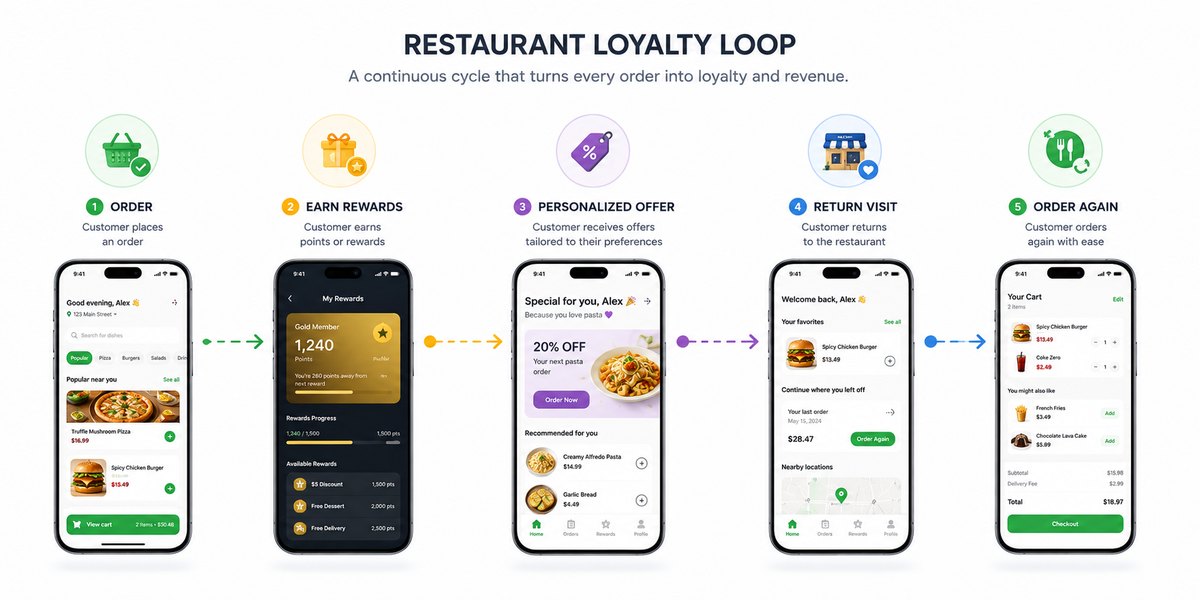
For years, brands built strategies around whatever they could pick up… quietly. Clicks. Third-party cookies. Inferred interests. That approach created reach, yet it also created distance. Then came the zero-party data collection that closed that gap. Preferences. Intentions. Context. The details the customer wanted brands to understand. And that changed the entire relationship.
Curious yet? Good. We will look at zero-party data collection from every angle. You will get what zero-party data collection actually is and how brands actually use it. Plus, we will show you different zero-party data collection strategies you can apply with intention.
In This Article:
What Is Zero-Party Data Collection?
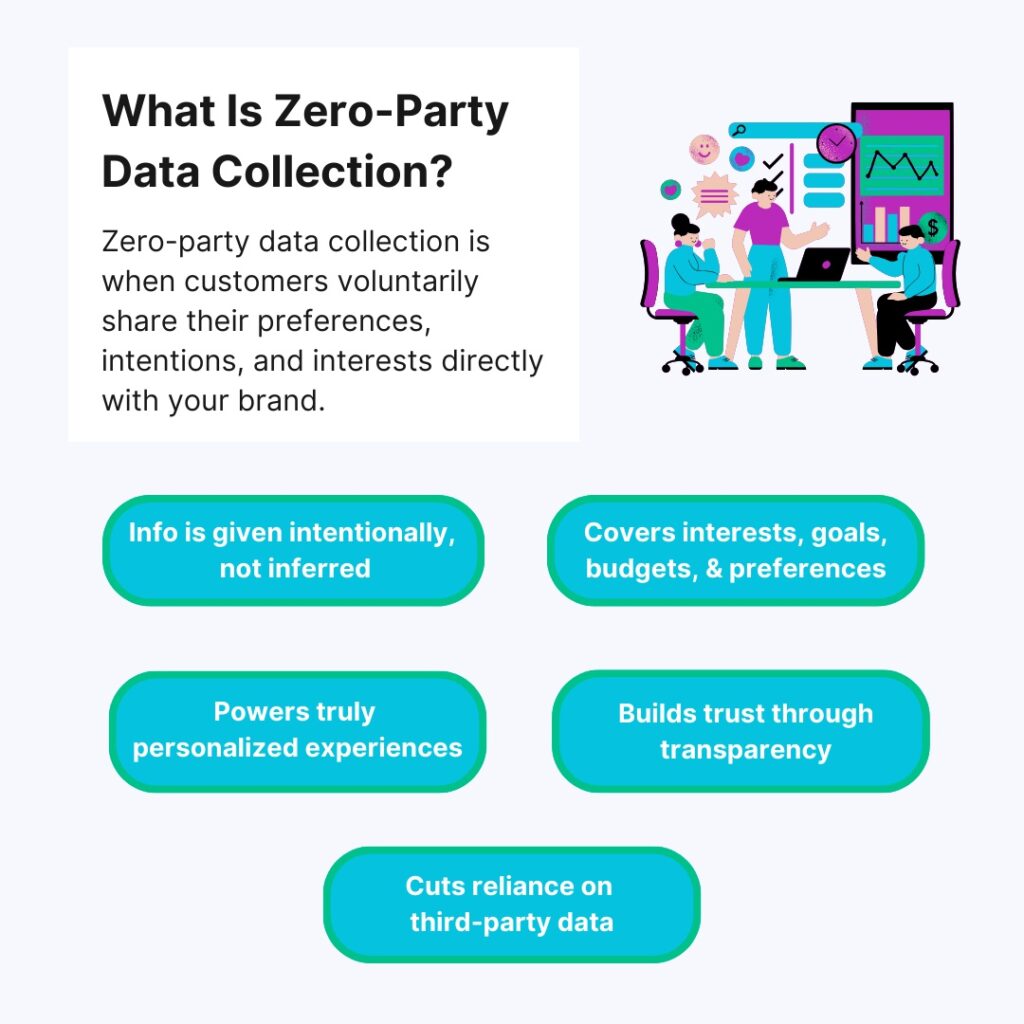
Zero-party data collection is the process of gathering information that customers intentionally and proactively share with your brand.
This can include customer preferences, purchase intentions, interests, goals, budget range, content topics they care about, or how often they want to hear from you. The customer gives you the information directly. You don’t infer it from customer behavior. You don’t pull it from third-party sources. You simply ask, and they choose to answer.
How Zero-Party Data Differs From Other Data Collection Methods
Here’s where the lines get very clear between the zero-party data collection process and every other method brands have leaned on for years.
| Zero-Party Data | First-Party Data | Second-Party Data | Third-Party Data | |
| Who Provides the Data | Customer directly and intentionally | Customer indirectly through behavior | Partner company’s customers | External aggregated audiences |
| How It is Collected | – Surveys- Quizzes – Preference centers – Onboarding forms | – Website tracking – App activity – Purchase history | Shared via direct partnership agreements | Purchased from data brokers |
| Level of User Intent | High – explicitly declared | Medium – inferred from actions | Low to medium – inferred | Low – inferred from broad signals |
| Accuracy of Preferences | Very high – based on stated choices | High – behavior-based assumptions | Moderate – depends on partner quality | Variable – often generalized segments |
| Transparency With User | Full – user knows what they shared | Partial – disclosed in privacy policy | Limited – user may not know details | Low – user rarely aware of collection source |
10 Zero-Party Data Collection Methods Brands Use For Long-Term Growth
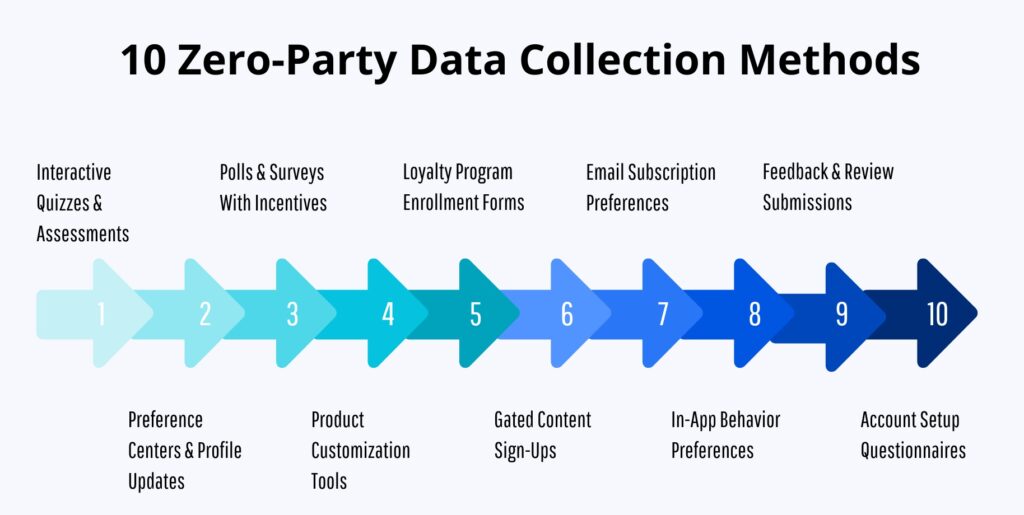
Here are 10 very specific ways brands are collecting zero-party data and turning it into something that compounds over time.
1. Interactive Quizzes & Assessments
Product finders, style quizzes, skin assessments, and diagnostic tools encourage users to share preferences in exchange for personalized results.
2. Preference Centers & Profile Updates
A preference center gives customers control over what they share. They can update interests, communication preferences, product categories, and more.
3. Polls & Surveys With Incentives
Short surveys paired with a reward increase participation. Discounts, loyalty points, or early access motivate users to share valuable insights about goals or priorities.
4. Product Customization Tools
When customers build their own product, they reveal personal preferences naturally. Size, features, add-ons, colors, usage needs – every selection becomes declared data you can use later for upsells and personalization.
5. Loyalty Program Enrollment Forms
Enrollment forms usually collect birthday details, interests, shopping habits, and product preferences. Because customers expect personalization from loyalty programs, they willingly provide accurate information.
6. Gated Content Sign-Ups
Webinars, guides, whitepapers, and reports can require more than just an email. Ask about role, industry, goals, or challenges, and high-intent users voluntarily exchange meaningful data for expertise or exclusivity.
7. Email Subscription Preferences
Let subscribers choose topics, frequency, product categories, and event notifications. This reduces unsubscribes and improves engagement because communication matches declared interests.
8. In-App Behavior Preferences
Within apps or dashboards, users can define notification types, feature priorities, interests, and dashboard customization. These settings capture evolving preferences for how someone wants to use the product.
9. Feedback & Review Submissions
Reviews and feedback forms include structured questions about satisfaction, usage reasons, and improvement areas. This generates social proof while gathering explicit customer insights.
10. Account Setup Questionnaires
During onboarding, you can ask about goals, challenges, use cases, and preferences. This establishes personalization from day one.
Why Are Brands Prioritizing Zero-Party Data Collection: 5 Key Benefits
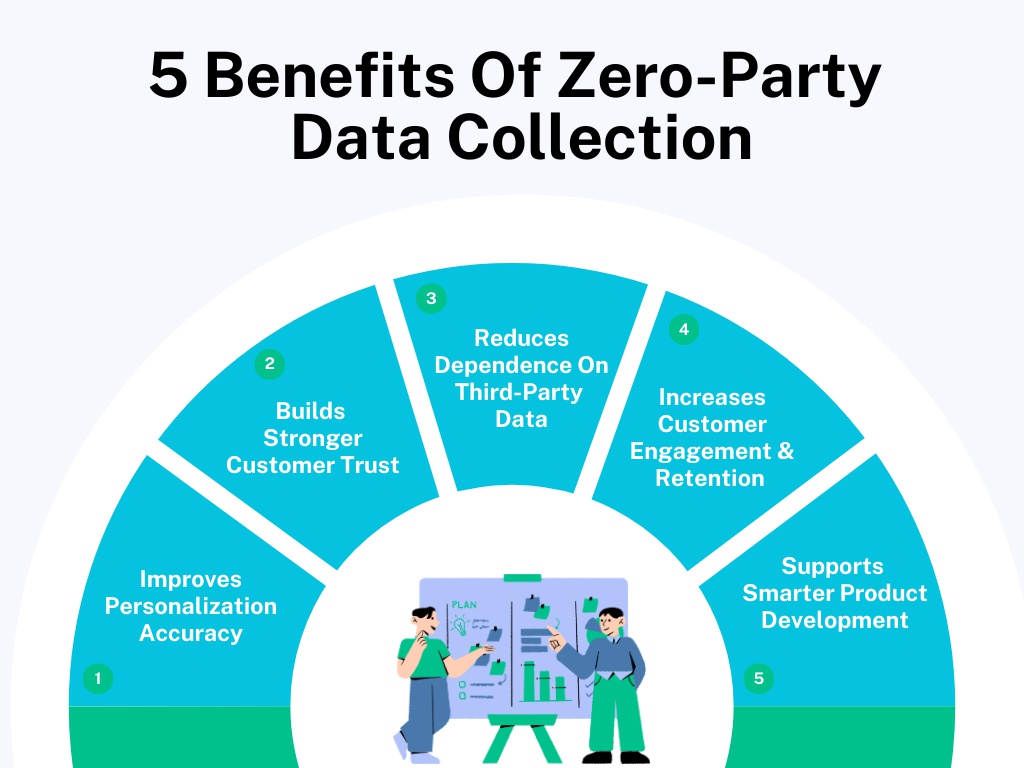
Let’s look at 5 ways zero-party data collection pays off for both the business and the customer.
1. Improves Personalization Accuracy
“Personalized” marketing efforts were never actually personalized. You looked at something once – suddenly it followed you everywhere. You got emails that were almost relevant. Close, but not quite. It was like someone overheard half your conversation and tried to guess the rest.
Zero-party data changes that entire dynamic. Rather than assuming what someone wants based on patterns… brands just ask. And customers answer. No probability models trying to “predict intent.” And when companies actually use that declared input properly, personalization performance improves by 25%.
When someone directly shares what they care about or what they are looking for, the accuracy jumps dramatically. The brand doesn’t have to infer anything. It doesn’t have to fill in blanks. It knows.
And when a brand actually knows what you want instead of making educated guesses, the experience is smoother. Cleaner. Less annoying. It is not “close enough” personalization. It is on-target personalization. That difference matters more than brands used to admit.
2. Builds Stronger Customer Trust
People don’t hate data collection. They hate secretive data collection. What makes customers uncomfortable is the feeling of being tracked without understanding how or why. In fact, 69% of customers willingly share data when it leads to tailored experiences – they just want clarity about what they are giving and what they’re getting in return.
Zero-party data removes that creepy layer. Because now, the customer knows exactly what they are sharing. There is no hidden trail being stitched together. And that transparency changes how the customer relationship feels.
When someone chooses to share information, they feel in control. “The brand isn’t taking, I’m giving it myself” creates a completely different emotional tone. And trust built on clarity lasts longer than trust built on silence.
3. Reduces Dependence On Third-Party Data
The digital world isn’t as open as it used to be. Browsers are tightening tracking. Customer data platforms are limiting access. Regulations like the California Consumer Privacy Act (CCPA) and the General Data Protection Regulation (GDPR) are stricter. Consumer data sharing isn’t as easy as it once was.
Brands that built their marketing strategy around buying target audience access or relying heavily on external data providers are feeling that squeeze.
Zero-party data strategy is the antidote to that dependency. When customers share information directly with a brand, that data belongs inside the brand’s own ecosystem. It is permission-based, and it is not vulnerable to sudden rule changes somewhere else.
That kind of control is strategic. It gives brands breathing room. It gives them a competitive advantage. It gives them ownership over their audience relationships instead of renting access to them.
4. Increases Customer Engagement & Retention Rates
There is something subtle that happens when someone voluntarily shares information. They step forward and take part. It may look like a small action on the surface, yet psychologically, it moves them from being a bystander to actively participating.
And that changes the energy of the interaction.
When communication has something a customer explicitly said, it feels like the brand is actually paying attention. Over time, that alignment keeps the customers around. Not because they are overwhelmed with reminders. Not because they are being chased. But because the experience is relevant. And relevance is what keeps relationships alive.
5. Supports Smarter Product Development
Most product decisions historically have been made by interpreting behavior.
Sales numbers.
Usage trends.
Drop-off points.
Market shifts.
Those signals are useful – but they are indirect. They show what happened, not necessarily what customers actually want next.
Zero-party data fills that gap by giving insight into motivations – not just outcomes. That distinction is powerful because motivations reveal direction. Instead of reacting to patterns after the fact, you can identify emerging needs earlier and prioritize features based on stated importance.
How Leading Brands Use Zero-Party Data: 5 Practical Use Cases

Only 16% of marketers are actively using zero-party data right now, which means most brands are still stuck on assumptions and indirect signals. That creates a serious advantage for the few who are doing this properly. Here are 5 real ways companies leverage zero-party data to make every interaction smarter and more relevant.
1. Tailoring On-Site Product Recommendations
Leading brands aren’t waiting around to “learn” through browsing trails. They are asking for direction upfront, and then they are rebuilding the browsing experience in real time. That means:
- The homepage reorganizes.
- Categories get prioritized differently.
- Certain product attributes get elevated.
- Entire collections disappear from view if they are irrelevant.
And it is not just “You may also like.” It is architectural. The structure of what someone sees changes based on what they have already said about themselves. That affects sorting logic and navigation emphasis – not just recommendation widgets. And it also shortens the path to what the customer actually wants. And shortening the path reduces friction.
2. Customizing Loyalty Program Rewards
Most loyalty programs are rigid. Earn points. Redeem from a fixed catalog. Repeat.
But brands are using zero-party data to make loyalty dynamic instead of static. When customers share what motivates them, they adjust reward pathways accordingly. That means:
- Reward visibility shifts based on stated preferences.
- Certain tiers unlock benefits aligned with personal priorities.
- Communication around loyalty milestones changes tone and emphasis.
- Redemption suggestions adapt to what the customer actually values.
The core loyalty structure stays intact, but the presentation and incentive emphasis change per member. That makes the program more of a flexible reward system based on individual motivation patterns. And this increases participation without increasing cost.
3. Optimizing Targeted Social Media Ads
This one is operationally powerful. Rather than building ad audiences on social media platforms purely from pixel data or lookalike modeling, brands are feeding declared interests directly into campaign segmentation. That allows brands to:
- Build segmented creative tracks aligned with stated priorities.
- Control frequency differently depending on expressed urgency.
- Adjust messaging angle without assuming emotional triggers.
- Suppress irrelevant marketing campaigns entirely.
So instead of algorithmically hoping the right ad connects, brands narrow creative focus from the start. Ad creative, copy emphasis, offer framing – they all become tightly aligned with declared input.
– It reduces wasted impressions.
– It improves creative consistency.
– And it prevents audience fatigue caused by irrelevant messaging.
4. Designing Interactive Customer Experiences
Successful brands are building personalized experiences that change based on what customers choose inside them – interactive quizzes, preference builders, configurator flows, personal dashboards. But not as gimmicks. These interactions capture declared inputs that directly alter the experience architecture.
That means:
- Content modules rearrange dynamically.
- Educational materials prioritize specific topics.
- Progress indicators adapt to chosen goals.
- Feature walkthroughs shift based on skill level or interest.
The interaction isn’t just collecting data or information. The moment someone shares input, the experience adjusts around it. The path changes based on what they said they want. That makes everything clearer and easier to move through. And naturally, people stay around longer because the experience keeps up with them.
5. Adjusting Subscription Plans & Offers
With subscriptions, it really comes down to one thing: are they still relevant? Brands are utilizing zero-party data to refine subscription structures at a granular level.
When customers share details, brands adapt plan presentation and upgrade paths accordingly. This impacts:
- Plan comparison visibility.
- Default recommendations.
- Add-on suggestions.
- Billing cadence options shown first.
- Renewal messaging strategy.
Rather than presenting the same three-tier structure to everyone, brands subtly prioritize what matches the customer’s self-declared profile. And no, it doesn’t require rebuilding the subscription model entirely. You have to reorganize how it is displayed and offered. And because the plan isn’t “imposed”, it reduces downgrade risk and lowers cancellation probability.
5 Zero-Party Data Collection Strategies To Transform Preferences Into Profits

These 5 strategies show how to take valuable zero-party data and use it to generate profits – not just fill a spreadsheet.
1. Break Data Requests Into Micro-Actions Across The Journey
Here’s the mistake most teams make: they try to collect everything at once. Big forms. Long surveys. Overloaded preference center data. That is friction.
Micro-actions work differently. Instead of asking for 5 things in one place, you distribute single, low-effort questions across natural interaction points. One tap. One selection. One choice. Each small input is lightweight, but collectively, it builds a rich preference profile without overwhelming anyone.
Do This:
- Replace long onboarding forms with one-question prompts embedded inside browsing, cart, account, and post-purchase screens.
- Limit each data request to a single decision (one dropdown, one toggle, one selection).
- Store and unify micro-responses immediately so every new input updates the customer profile in real time.
- Map each micro-question to a specific downstream action – recommendation logic, content change, offer adjustment.
2. Trigger Data Collection At Key Decision Points
Timing matters more than the question itself. If someone is actively comparing options, choosing features, hesitating before checkout, or exploring upgrades – that is when intent is sharpest, and answers are clearest. At decision points, customers already have context in mind. They are thinking about priorities, and that is the best time to ask about them.
Do This:
- Identify drop-off moments in the funnel and place one targeted preference question right before exit.
- Add short intent prompts inside comparison views or feature selection pages.
- Trigger a clarifying question when users toggle between multiple plans or configurations.
- Suppress preference prompts entirely for users who are browsing casually with low dwell time.
3. Provide Real-Time Feedback Or Recommendations After Submission
If someone shares information and nothing visibly changes, you just trained them that sharing doesn’t matter. That is a mistake. The identified zero-party data should produce an immediate response. Not a “Thanks for submitting.” Not a delayed email. An instant shift.
When users see their input shown instantly, it reinforces that sharing was worthwhile. And this closes the loop.
Do This:
- Program dynamic page refreshes that adjust visible products or content immediately after selection.
- Highlight updated results with visual confirmation (“Based on your selection…” messaging that appears instantly).
- Reorder page sections dynamically instead of redirecting users elsewhere.
- Track which post-submission changes get clicks or conversions to refine logic over time.
4. Make Data Sharing Transparent & Highlight Immediate Benefits
People hesitate when they don’t know what happens next. Ambiguity kills participation. Transparency increases it. And in a world where 63% of people have experienced cyber abuse at least once, hesitation around sharing personal information makes complete sense.
If you are asking for information, say exactly why – and what changes because of it. Customers should understand the trade: “You tell us this → we change this.”
Do This:
- Add one-line benefit statements directly next to each input field explaining the outcome.
- Use conditional microcopy that previews what will change before submission.
- Avoid abstract phrases like “improve your experience”; specify the exact adjustment that will occur.
- Test placement of explanation text above vs. below input fields to measure completion impact.
5. Regularly Review & Refine Question Wording & Placement
The way a question is phrased can distort the answer. Even small wording changes impact how people interpret choices. Zero-party data isn’t valuable if it is biased or vague. So you need to treat questions like performance assets, not static copy.
Do This:
- Run quarterly audits on every live question and analyze response distribution for skew or confusion.
- Run A/B tests on wording variations to detect shifts in selection distribution.
- Evaluate whether users abandon flows after certain questions and adjust placement accordingly.
- Remove or consolidate questions that don’t help get any measurable business outcome.
3 Real-World Zero-Party Data Collection Examples You Can Adopt
Here are 3 real examples that show exactly how brands are using zero-party data, and how you can do the same.
1. CodaPet
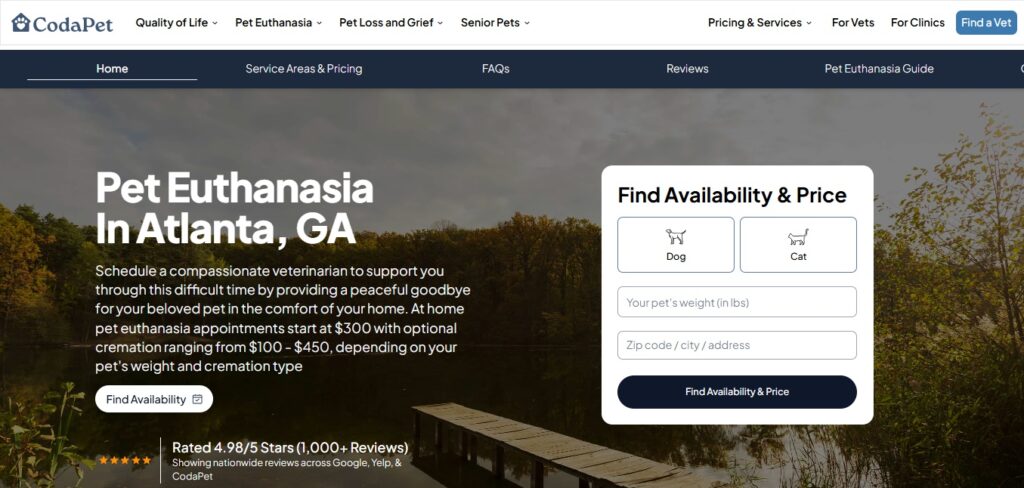
CodaPet’s in-home pet euthanasia is one of the most emotionally sensitive businesses possible. When someone visits their page, they are already in a serious moment. CodaPet treats that moment with precision, and they collect zero-party data in a way that respects it.
When someone starts booking, CodaPet asks direct and situational questions:
- What type of pet do you have?
- What is your pet’s weight range?
- Where will the appointment take place?
- Do you want private cremation or communal cremation?
- Would you like paw print keepsakes?
CodaPet then uses those answers immediately. Pricing updates based on the pet’s size. Service recommendations adjust based on cremation preference. Appointment timing reflects the location provided. Follow-up emails reference the exact choices the pet parent selected.
After the service, CodaPet continues using declared data. If someone selected private cremation, updates focus on return timelines and memorial options. If someone chose communal cremation, messaging focuses on closure and support resources. The communication is based on what the person explicitly said.
If you want a benchmark for high-integrity zero-party data use in a sensitive service environment, this is it.
2. Custom Sock Lab
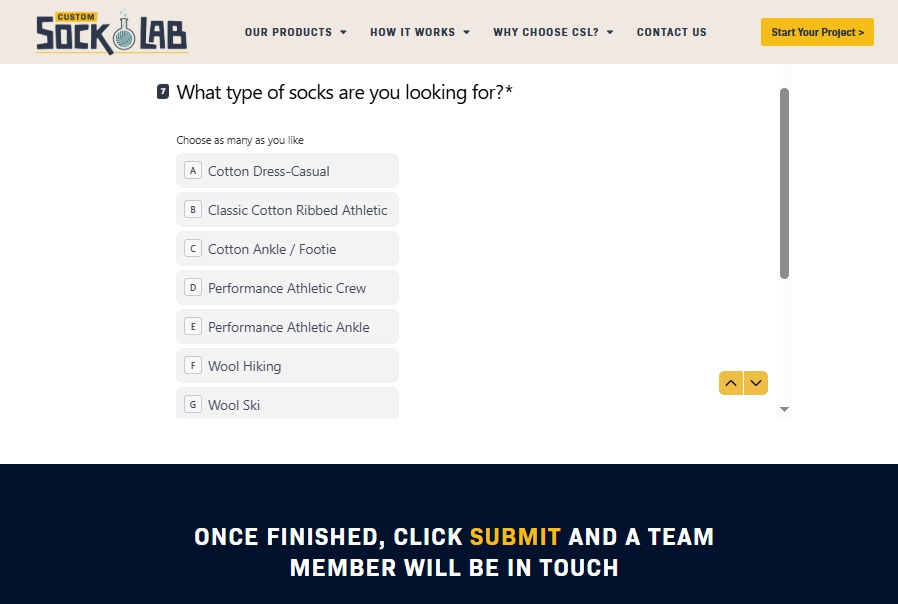
Custom Sock Lab’s dress-casual socks are sold for corporate gifting and branded merchandise. They don’t rely on assumptions about what the buyer wants. On their custom dress/casual sock product page, they prompt buyers to upload artwork, select quantity tiers, specify sock style, choose color palettes, and indicate target sizing.
When a buyer uploads a logo, Custom Sock Lab routes that design into a proofing workflow. If the buyer selects a specific sock type, the production template changes. If someone chooses a large quantity tier, the pricing recalculates instantly, and production timelines adjust accordingly.
They also ask about intended use in project discussions. Is this for a corporate conference? A wedding party? A retail resale run?
That declared purpose changes packaging suggestions and production recommendations. A wedding order triggers coordinated color refinement and delivery timing aligned with event dates. A corporate order prompts branding clarity checks and bulk packaging formats.
They use what customers explicitly tell them to structure:
- Design proofs
- Material selection
- Production planning
- Delivery timelines
- Packaging decisions
There is no passive behavior tracking here. The customer states their design, their quantity, their purpose. Custom Sock Lab builds around it. This is zero-party data embedded directly into production logic.
3. EXT Cabinets
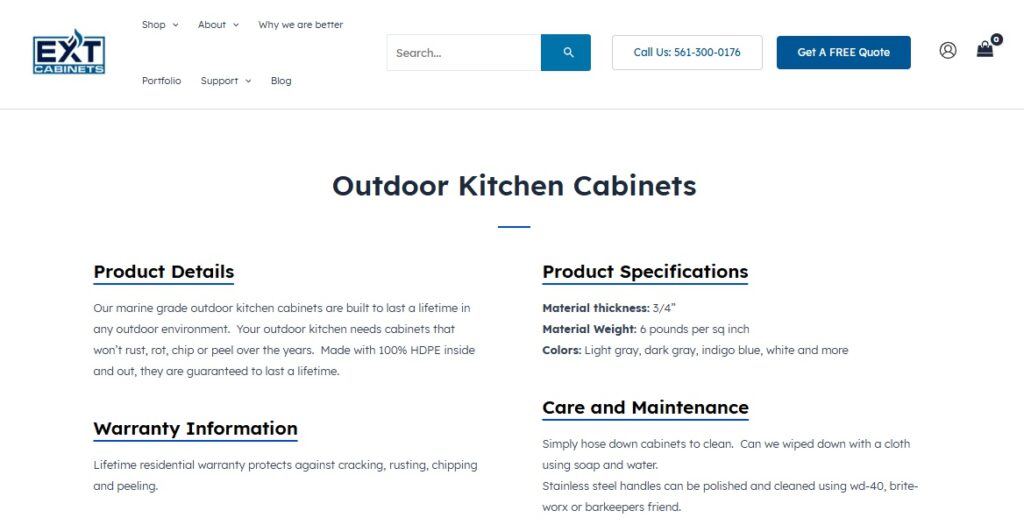
The buyers of EXT Cabinets outdoor kitchen cabinetry are planning permanent installations. This is a considered purchase with technical requirements. Here, EXT Cabinets collects zero-party data in a structured and project-based way.
When someone explores outdoor kitchen cabinets, they are prompted to define project parameters. Customers state these details clearly. EXT Cabinets uses the declared data to shape consultation conversations and quote preparation.
If someone indicates a coastal installation environment, EXT Cabinets focuses discussions on corrosion-resistant materials and weather performance. If a buyer selects a specific configuration style, the planning documents shift accordingly. If dimensions are submitted, the quote references the exact measurements provided by the customer.
During consultations, EXT Cabinets references the submitted data directly. The conversation starts with what the customer already defined. Follow-up emails recap the stated configuration and material preferences. Design revisions show declared specifications rather than assumptions.
This structured project input feeds into:
- Quote calculations
- Material recommendations
- Layout refinement
- Installation planning
If you want an example of zero-party data shaping high-ticket, technical sales from day one, EXT Cabinets sets the standard.
Conclusion
Zero-party data collection gives you clarity that most brands only wish they had. When you build around it, everything starts connecting. Stop pretending you can read minds. Ask when it makes sense. Respond immediately. Prove the value of the exchange within seconds. Keep it simple – don’t overdesign it and don’t turn it into a 14-step profile interrogation.
At AudienceScience, we have built our technology with the same principle you just read about. Our platform works around two simple things: give you total control of your audience data, and make every bit of that extremely valuable data actionable in real time.
Instead of letting your customer data sit in silos or bounce between different tools, we unify it in one system where it directly informs targeting, segmentation, and media execution – without the usual complexity and waste.
Our tech lets you build proprietary audience assets from the data you own, then connect those segments directly to media buys and performance metrics across display, video, and mobile channels without losing personal context or clarity.
Ready to put what your customers actually say into action? Get started with AudienceScience.