There is no shortage of B2B lead generation advice out there. The problem is that most of it tells you the same thing – run some ads, write some blogs, try LinkedIn. Nobody tells you which of those actually turns into revenue and which ones just pad your lead count. That is the gap. You can have 2,000 marketing-qualified leads (MQLs) in your CRM and still have an empty pipeline.
That is exactly what we are going to fix here. We will show you 10 B2B lead generation strategies that actually put qualified opportunities in front of sales. You will also see 4 popular tactics that waste budget and time without giving much back.
In This Article:
What Makes B2B Lead Generation Different From B2C
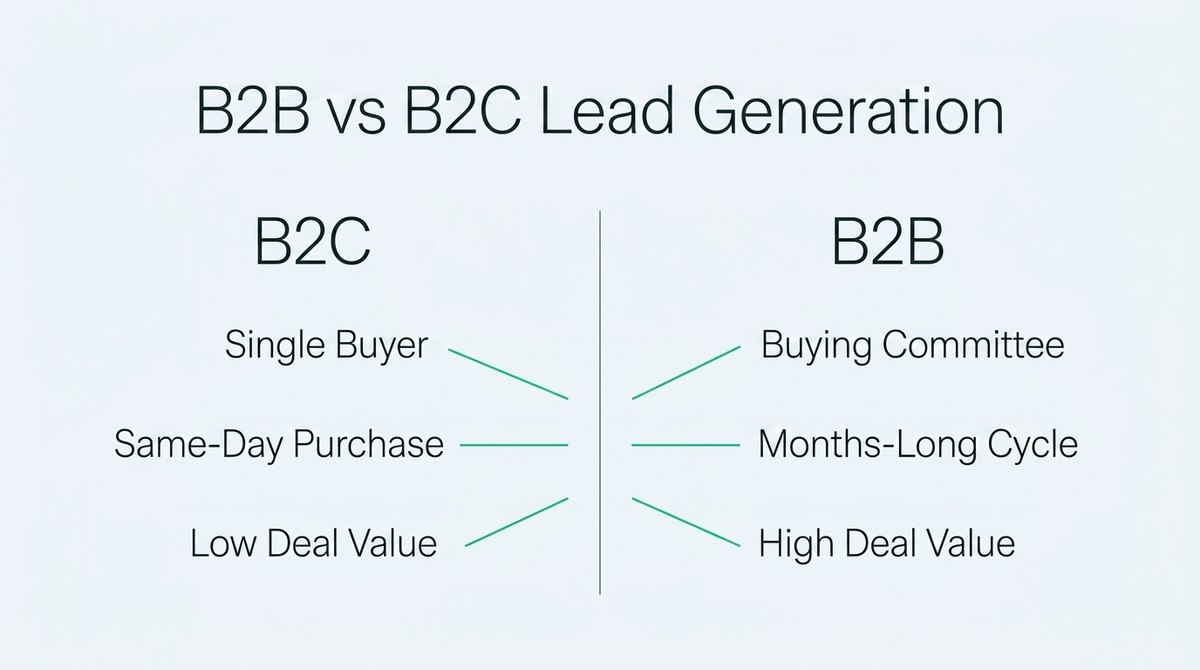
On the surface, B2B and B2C lead gen look similar – you are trying to get people interested in buying from you. But the way the buying works is totally different.
In B2C, somebody clicks an ad and buys a pair of shoes that same afternoon. In B2B, a buying decision involves three to seven people across different departments who all need to agree. That sales process takes months, not minutes.
The deal sizes are different, too. A single B2B deal can be worth $50K to $500K+. That means each qualified lead carries real value. But the buyer also does way more homework before talking to anyone. They compare vendors on their own. They read case studies. They check peer reviews.
By the time they fill out a form on your site, they have already narrowed their options. Your B2B lead generation strategies have to show up during that research window — not after they have already decided.
10 Effective B2B Lead Generation Strategies That Actually Fill Pipelines
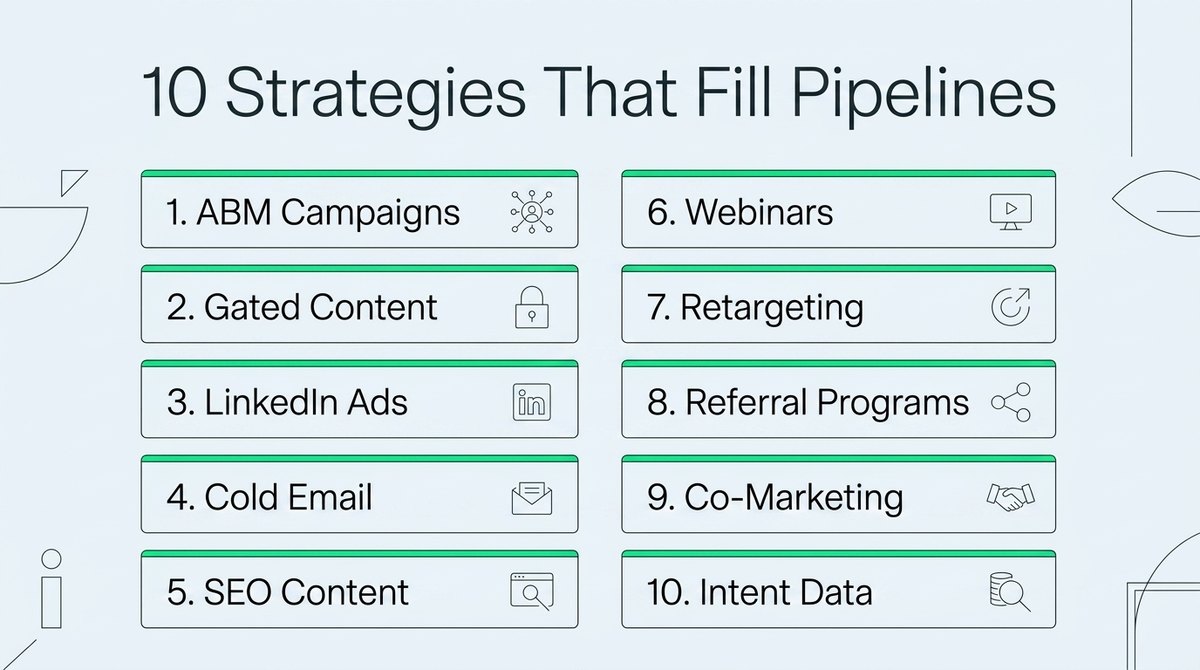
Each of these 10 strategies works differently. Some generate leads in weeks. Others build over months. The right mix of the best lead generation strategies for your team depends on your budget and how long your deals take to close.
1. Run Account-Based Campaigns Targeting Your Top 100 Accounts
ABM starts from the other end of the sales funnel. Instead of running ads and hoping the right people click, you pick the exact companies you want to close and build everything around them. Your ads target those accounts. Your content speaks to their industry. Your sales team is already working the same list.
When marketing and sales teams are both aimed at the same 50-100 companies, the close rates go up because you are not wasting time on people who were never going to buy.
Build the target list with sales based on deal size and industry fit – marketing shouldn’t pick aloneRun LinkedIn ads visible only to employees at those specific accounts using company name targetingCreate landing pages personalized by industry so each account sees content that matches themSync ABM engagement data into your CRM, so sales knows which accounts are paying attention right now
2. Build Gated Content That Solves a Specific Problem Your Buyers Have
Gating content still works – when the things behind the form are actually worth trading an email for. A generic whitepaper about industry trends doesn’t work. A calculator that shows a procurement director exactly how much they would save by switching vendors does.
The difference is how specific the content is to a problem the buyer is already trying to solve. If they are going to give you their contact details, the content needs to answer a question they were already researching.
Build content around one specific pain point that comes up on nearly every first sales callUse calculators or assessment tools instead of static PDFs whenever the topic allows for itKeep the gate light – name and work email is plenty – so conversion rates stay north of 20%Route high-quality leads to sales with the asset title attached, so the rep has context before they reach out
3. Use LinkedIn Ads to Reach Decision-Makers by Job Title and Company Size
LinkedIn is the only paid channel where you can target someone by their exact job function and the size of their company at the same time. That means you can get your message in front of VP-level buyers at mid-market companies in a specific industry – and nobody else sees the ad.
The CPMs are higher than Facebook or Google, but that doesn’t matter when every click is from someone who actually matches your ideal customer profile. It is the highest-precision paid channel available for B2B.
Target by job function and seniority together. Job titles vary wildly across companies; functions don’tExclude companies below your minimum deal size so budget doesn’t go toward accounts that can’t buyRun single-CTA Sponsored Content instead of carousels. One clear ask outperforms split-attention formatsCap frequency so the same buyer doesn’t see your ad 15 times in one week and starts ignoring it
4. Launch a Cold Email Sequence With Proper Domain Warmup and Verification
Cold email has a bad name because most teams send it badly. They blast an identical copy from their main domain to 5,000 people and wonder why everything lands in spam. Done right, it is one of the cheapest ways to get in front of B2B buyers.
According to UnifyGTM’s 2026 cold email data, the average reply rate sits at 3.43%. Teams that invest in proper infrastructure consistently beat that number.
- Register 2-3 separate domains for cold outreach, so your primary business domain stays protected entirely
- Warm each inbox for three full weeks with gradually increasing volume before launching any cold sequences
- Verify every address no more than 48 hours before the sequence starts. Stale lists damage the sender’s reputation
- Cap sends at 40-50 per inbox per day and space them evenly across the workday to look human-sent
5. Publish SEO Content That Ranks for Bottom-of-Funnel Buyer Queries
Most B2B blogs rank for top-of-funnel keywords that attract a broad audience with zero buying intent. “What is demand generation?” gets traffic, sure.
But the keywords that produce a pipeline are the ones buyers type when they are comparing options. Things like “best CRM for field sales teams” or “contract manufacturing vs in-house production costs.”
Those are the queries where someone is actively deciding, and your content marketing campaigns can shape which direction they go. The question of whether to invest in organic rankings or paid search for these queries depends on your timeline and budget, but either way, you want to be visible on search engines when buyers are comparing.
For manufacturers specifically, this is where your website becomes an effective lead generation strategy or stays a digital brochure. If your site doesn’t have pages targeting the exact phrases engineers type when evaluating vendors, you are invisible during the only part of the buying process that actually matters.
Most manufacturing companies don’t have the in-house design team to build this kind of site. That is where working with a web design agency that specializes in manufacturing makes a real difference. weCreate, for example, builds websites specifically for CNC shops and contract manufacturers. Their capability pages are structured around how procurement teams actually search.
Their sites come with RFQ forms on every service page and content architected for the long-tail queries engineers use during vendor evaluation – the kind of SEO-ready structure that turns a manufacturer’s website into an inbound lead source instead of a static brochure.
Audit current keywords and remove anything that attracts researchers instead of buyers actively comparing vendorsBuild comparison pages for “[your category] vs [alternative]” queries that show up during evaluation searchesPut a demo or consultation form on every bottom-of-funnel page to capture leads – not a newsletter signup, a buying actionTrack which SEO pages actually generate sales-qualified leads (SQLs), not just traffic. That tells you which keywords produce a pipeline
6. Host Webinars That Teach Something Your Sales Team Explains on Every Call
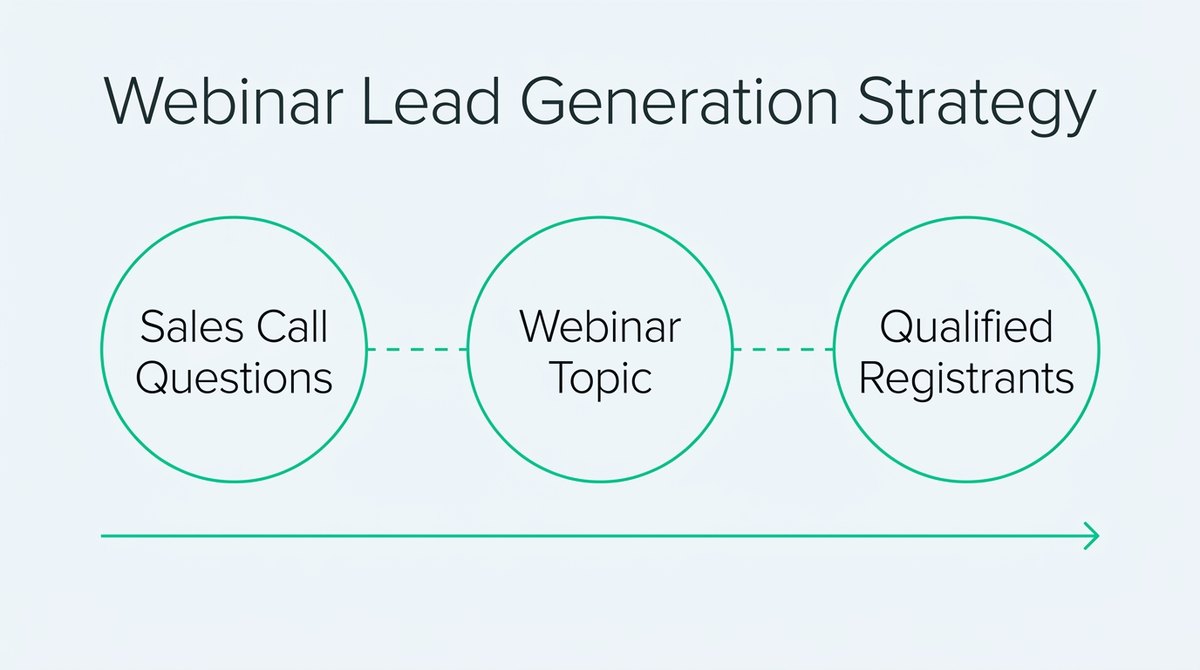
The best webinar topic is whatever your AEs spend the first 15 minutes of every discovery call explaining. If they are constantly walking prospects through why their current approach costs more than they realize, that is your webinar.
The people who register are self-selecting as having that exact problem, which makes them way more qualified than a random inbound lead form fill. Once the webinar is recorded, adding auto-generated captions makes the content accessible to a wider target audience and easier to repurpose into clips.
Ask your top three AEs what they explain on almost every single first call – that becomes the topicKeep it under 35 minutes with 10 minutes of Q&A. Attendance rates drop hard past the 45-minute markHave the assigned AE send a personalized recording follow-up to every registrant within 24 hours of the eventGate the recording separately so people who missed the live session can still convert with the same exact content
7. Set Up Retargeting Campaigns on Website Visitors Who Didn’t Convert
Most of your website visitors leave without doing anything. That doesn’t mean they weren’t interested. They just weren’t ready that day. Retargeting keeps your brand in front of those people after they leave, across other sites and social media platforms.
The conversion rates on retargeting ads are higher than cold campaigns because the audience already knows who you are. They came to your site, read your stuff, and left. The retargeting ad brings them back when they are ready for the next step.
Set up retargeting pixels on your highest-intent pages – pricing and demo request pages specifically, not blogsExclude people who have already converted, so the ad budget doesn’t get wasted on leads you already haveSwap ad creative every two weeks so the same person isn’t seeing the identical message on repeat for a monthRun retargeting on LinkedIn and Google Display together to reach the same buyer across both platforms
8. Build a Referral Program That Rewards Introductions, Not Just Sign-Ups
The B2B lead quality from referrals is high because they come with trust already built in. A warm intro from a peer carries more weight than any ad or cold email ever will. 59% of B2B buyers trust peer recommendations – compared to just 36% who trust vendor employees.
That is a massive gap. But most referral programs fail because they reward the wrong action. Giving someone a gift card for a “sign-up” just produces junk leads. Rewarding a qualified introduction, where the referred person actually takes a meeting, produces a pipeline.
Pay the referrer only after the referred contact completes a qualified meeting, not after a form fillMake the reward meaningful. $200-500 per qualified meeting is the going rate for B2B referral programsGive happy customers a personal referral link they can text or email directly instead of a generic form pageFollow up on every referred lead within 24 hours. Slow response kills the warm introduction advantage fast
9. Partner With Complementary Vendors on Co-Marketing Campaigns
Co-marketing gets your brand in front of another company’s audience without spending a dollar on ads. The trick is finding a partner that sells to the same buyer you do, but doesn’t compete with you.
Imagine you sell bookkeeping software for small businesses. Your ideal customer has usually just formed, or is about to form, an LLC. Instead of trying to reach those prospects from scratch, you could partner with Start in Wyoming to create a co-branded startup checklist, host a webinar on setting up a new business, or exchange qualified referrals.
They help entrepreneurs establish their business, while you help them manage it afterward. Since the services complement rather than compete with each other, both companies benefit from reaching buyers at the right stage of their journey.
The cost of these marketing strategies is basically the time to create the content. And you get more leads that come pre-warmed because the audience already trusts the partner brand that introduced you.
- Pick partners that share your buyer persona but sell something non-competing in an adjacent category
- Co-create one substantial asset – a webinar or a report – rather than just cross-promoting each other’s posts
- Agree on how leads get split before you launch, so both sides know what they are getting out of it upfront
- Do one co-marketing campaign per quarter with a different partner each time to reach fresh audiences regularly
10. Use Intent Data to Prioritize Accounts Already Researching Your Category
Intent data tells you which companies are looking into topics related to what you sell right now. If a cluster of people at a target account is reading articles about “CRM migration” this week, that is a signal your sales team should act on today.
The value isn’t in finding new leads. It is in telling you which of your existing targets are in-market right now, so your team talks to the ones most likely to respond. Combining this with digital PR that boosts your visibility in the same research channels makes the timing even sharper.
Layer intent data on your existing target account list and use a lead scoring system based on that. Don’t use it to build a brand new list from scratchSet up same-day alerts so sales gets notified when a target account starts showing research activity on your topicTime your outreach to match the intent spike. Reach out when activity is high, not on an arbitrary scheduleCompare conversion rates between intent-flagged and non-flagged accounts to see if the data source is working
11. Turn Event Badge Scans Into Follow-Up-Ready Leads
Trade shows can generate more than a pile of contacts when lead capture and follow-up are connected. Popl combines universal badge scanning with AI data enrichment and CRM integrations, so teams can capture event leads, enrich their details, and sync them to the CRM for timely follow-up.
- Scan badges at conferences and other in-person events with one workflow
- Enrich captured lead data before it reaches sales
- Send leads directly into the CRM so reps can follow up while the conversation is fresh
| Lead Gen Strategy | Best For | Time to Pipeline |
| ABM campaigns | Enterprise deals with named accounts | 3-6 months |
| Gated content | Mid-market with defined buyer problems | 1-3 months |
| LinkedIn ads | Teams with $5K+ monthly ad budget | 1-2 months |
| Cold email | Teams with strong targeting data | 2-4 weeks |
| SEO content | Companies building long-term inbound | 6-12 months |
| Webinars | Complex products needing education | 1-2 months |
| Retargeting | Sites with 5K+ monthly visitors | 2-4 weeks |
| Referral programs | Companies with happy existing customers | Ongoing |
| Co-marketing | Teams with partner relationships | 2-3 months |
| Intent data | Sales teams with ABM infrastructure | 1-2 months |
4 B2B Lead Generation Tactics That Sound Good but Waste Pipeline Time
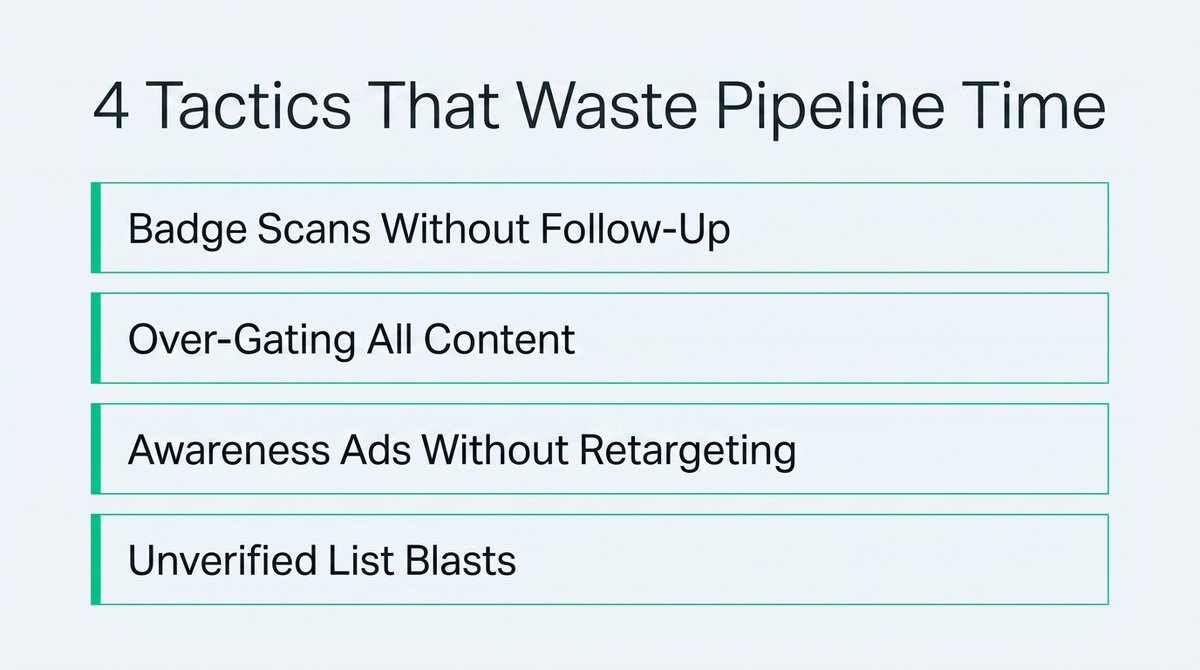
These four tactics show up in almost every B2B lead generation strategy guide, but they consistently underdeliver on actual pipeline numbers.
1. Collecting Badge Scans at Trade Shows Without a Follow-Up Plan
Scanning 400 badges at a booth looks productive until you realize nobody follows up within the first 48 hours. By day five, those prospects don’t remember your booth.
How to Fix: Assign every scanned lead to a specific rep before the show ends and send personalized follow-ups within 24 hours that reference the conversation from the booth.
2. Gating Every Piece of Content Behind a Form
When every page on your site requires an email address, people stop downloading. They go find the same information somewhere else where it’s free.
How to Fix: Ungate 80% of your content, especially blog posts and basic guides, and only put lead gen forms in front of things that have genuine unique value, like assessments or original research.
3. Running Top-of-Funnel LinkedIn Awareness Ads With No Retargeting Path
Awareness ads waste budget when there is no second step. Somebody sees your brand, maybe clicks, then disappears forever.
How to Fix: Never run a LinkedIn awareness campaign without a retargeting sequence already built and ready to capture the traffic that clicks but doesn’t convert on the first visit.
4. Buying Lead Lists and Blasting Them Without Verification or Segmentation
Purchased lists are full of dead addresses. Sending to them without verification destroys your sender reputation fast.
How to Fix: Run every purchased list through a validation service before it touches a sending sequence, and segment by role so each person gets a message relevant to them. Otherwise, you are making the same trust-eroding mistakes that kill conversion rates across every channel.
Conclusion
The gap between B2B lead generation strategies that fill pipelines and ones that just fill spreadsheets comes down to one thing: does the tactic produce people who actually buy, or does it just generate names?
The 10 solid lead generation strategies here each have a clear path from first touch to closed deal. The four in the “stop doing” section are the ones that look busy in weekly reports but never show up in the quarterly revenue number. Pick three that match your team and budget, run them properly for 90 days, and measure pipeline – not lead count.
We built AudienceScience to give advertisers full control over their audience data and ad delivery across digital channels. Our platform combines audience management with programmatic buying so teams can target the right accounts at scale from one place.
If your B2B lead generation efforts include paid digital, AudienceScience gives you the infrastructure to run them with real-time optimization built in. Learn more about how we can help you with your lead generation process.
Author Bio:
Burkhard Berger is the founder of Novum™. He helps innovative B2B companies implement modern SEO strategies to scale their organic traffic to 1,000,000+ visitors per month. Curious about what your true traffic potential is?