As a performance marketer, it is common to reuse social display ads. But this can cap the performance of your omnichannel strategy. Experience has shown that the physical environment consumers are in affects their attention.
Instead of recycling existing assets, build context-specific creatives for connected TV and digital out-of-home ads. It requires work, but this effort pays off. Research shows that ads smoothly integrated into premium media environments increase purchase intent by 40%.
But before you jump straight into developing new assets, align your campaign goals early. This will help ensure ad success across consumers’ screens.
In This Article:
Core differences between connected TV and digital out-of-home
Next, we’ll look at the differences of this premium inventory and how the environment affects consumer attention.
CTV creative should be designed for the big screen and high attention
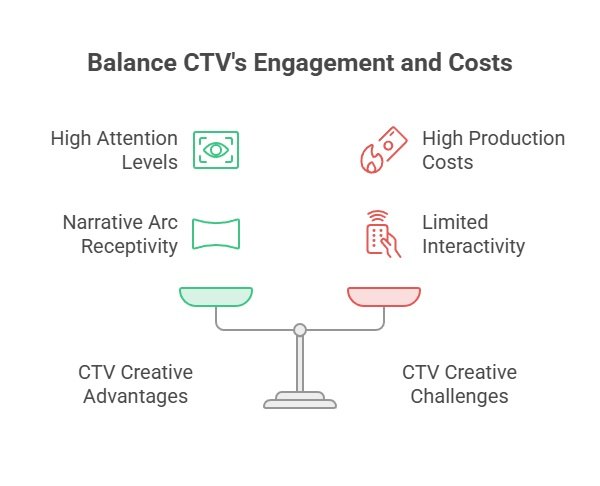
Connected television reaches a passive, immersive viewer. They’re relaxed at home and engaged in intentional viewing. Because they are focused on the big screen, this type of audience is highly receptive to narrative arcs. They’re also engrossed in emotional storytelling, along with longer-form messaging between 15 and 30 seconds.
You may think treating this channel as a purely top-of-funnel play is ideal. That would be a mistake.
While it is ideal for brand building and informing users about your product, you can also use this channel for deep, focused engagement. This is what drives real results such as increased sales and high-intent site visits.
That’s why it is vital to design specifically for hardware like smart TVs; viewers are deeply focused on what they’re watching. In fact, research from TVision shows that premium streaming environments garner high levels of attention. First-in-pod streaming ads, for example, capture up to 54% attention.
While this environment serves up a captivated audience, there is a major limitation. Production costs for high-quality assets can skyrocket compared to standard display ads.
The means of maximizing ROI here is to focus on premium visuals over interactive elements. That is, unless your audience is known to actively use their remotes.
DOOH advertising should win against micro-attention spans
Unlike the living room, DOOH advertising targets active, on-the-go consumers navigating physical environments. Commuting. Shopping. Waiting. They’re on the move. With this audience, you’re designing for micro-attention spans. Your ad is not an interruption. Instead, it should be part of the environment.
Your intention when creating these ads should change. This medium is built for instant brand recall and proximity-based conversions. These, along with brief, impactful contextual messaging, should work jointly to drive foot traffic into stores.
Compare a fast-paced placement on street furniture to a comfy, relaxed session on the couch. In a busy environment like a major transit hub, a consumer glances at digital billboards for a few seconds before catching the train. This person processes your message very differently from the viewer at home sitting through a commercial break.
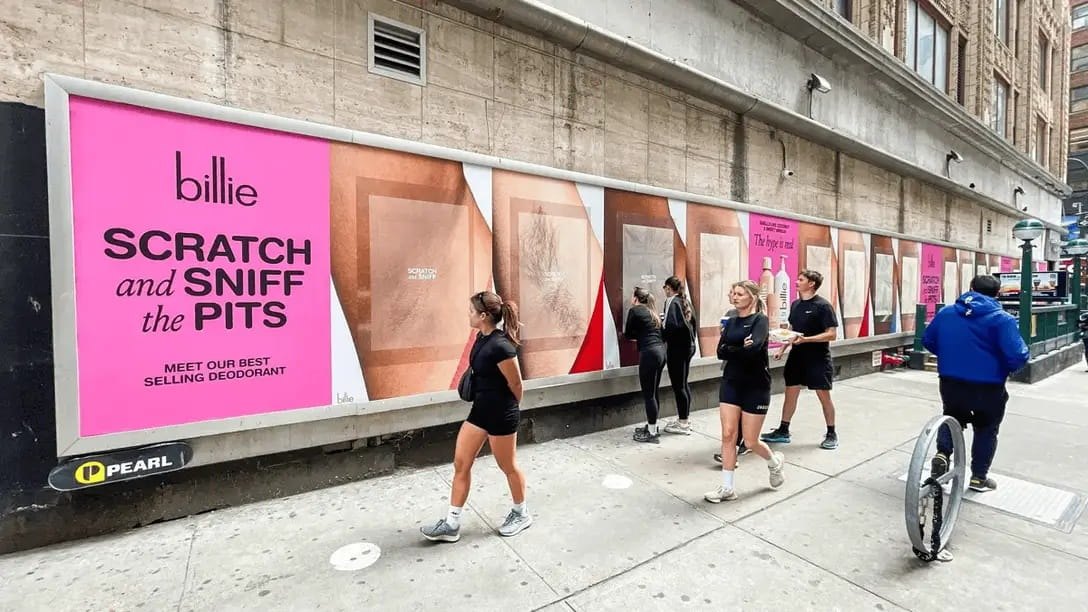
You need to stand out to this busy commuter. For DOOH advertisement creatives, you must rely on bold text and strong contrast to grab their attention.
This quick interaction that consumers have with digital out-of-home ads yields results. The OAAA reports that 76% of buyers took action after seeing these outdoor ads.
That said, while this inventory provides massive reach, there’s a catch. You can’t rely on deterministic clicks to measure performance; you’ve got to use location data proxies. These require more sophisticated attribution models.

5 simple but mighty tips to adapt your ad formats
Here are five actionable ways to adapt your ad formats across CTV and DOOH.
Stop repurposing and start rebuilding ad formats
Smart advertisers know not to take standard 9:16 social videos and awkwardly crop them to fit a massive TV screen. This immediately signals low-quality content to your audience, which is what you must avoid (or stop doing).
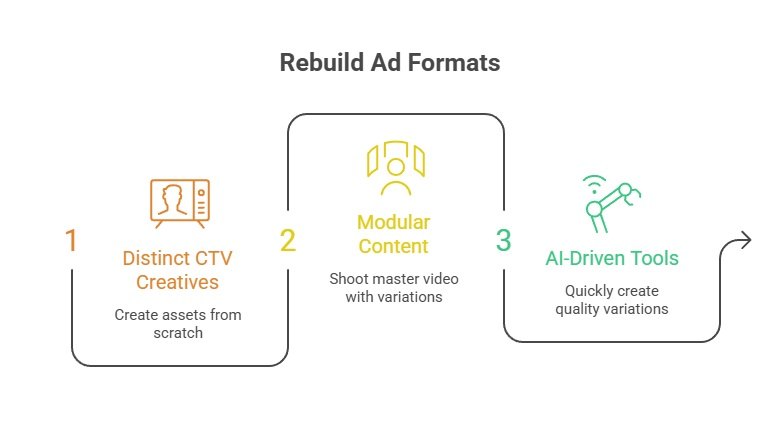
Instead, start making distinct CTV creatives and outdoor advertising assets from scratch. Compared to just recycling files meant for social media ad campaigns, this is far better.
A smarter approach altogether is working on modular content. When planning your video production, shoot one master video from day one, with varied aspects in mind. These are 16:9 for streaming and 9:16 for vertical billboards, for example.
Plus, you can use AI-driven tools like Smartly and Celtra to quickly create variations that maintain quality. If you prefer to work with professionals, you can partner with a creative agency to produce your videos. It’s a great way to see how your master assets can be smartly adapted across channels.
You shouldn’t reuse the raw files, though. But you should repurpose your core messaging across multiple touchpoints to maintain brand consistency.
Adjust pacing to fight ad fatigue
Pacing is what determines whether campaigns succeed or fail. Streaming sites give you the luxury of a 15- to 30-second window to tell a comprehensive story. In contrast, automated DOOH demands instant recognition. These often rely on a 5-second burst to make an impression.
Stretching a 5-second message into 30 seconds bores the viewer. And if you condense a 30-second story into 5 seconds, you’ll just end up confusing them.
Viewers are bombarded with visuals across devices. So you need to follow certain rules to combat ad fatigue.
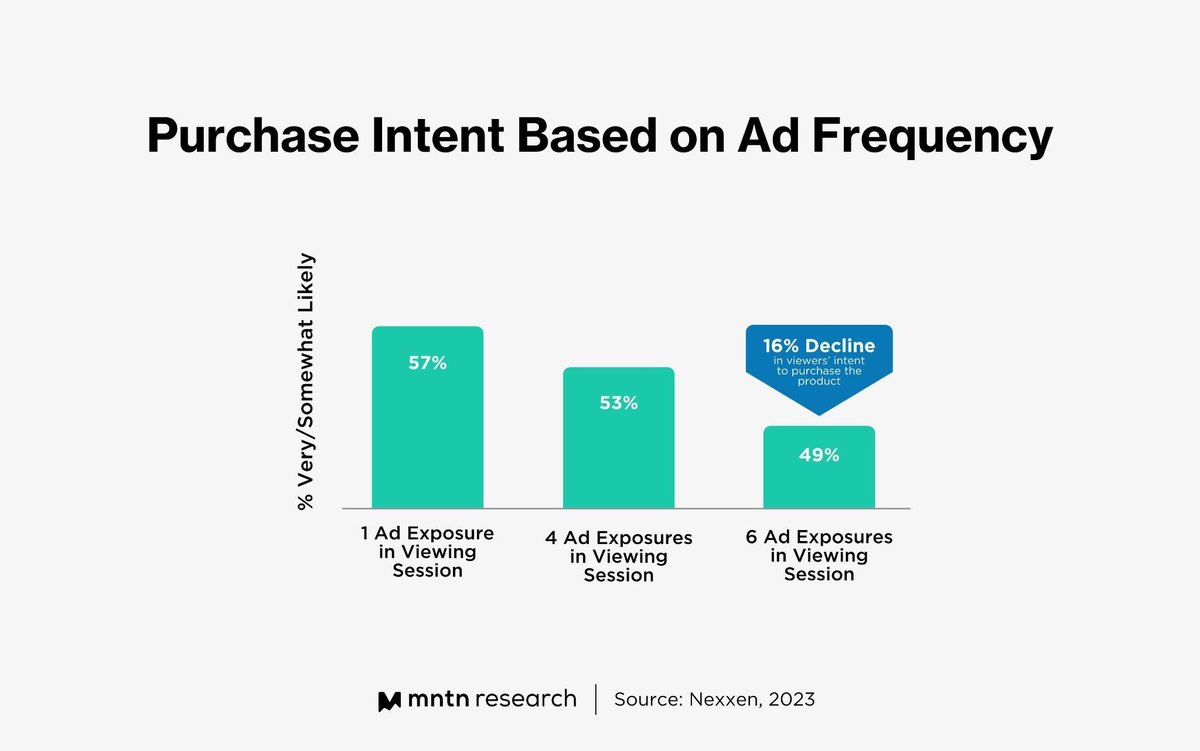
One rule is introducing frequency capping limits. You can cap ad frequency to 3-5 per household per week, for example. Without these caps, you risk causing audience burnout. Supporting this is research showing that exposing a viewer to the same ad 6 times during a single viewing session results in a 16% decline in purchase intent.
Incorporate visual contrast for the digital environment
Glare. Direct sunlight. Bad weather. Designing for outdoor digital displays means you’re fighting this trio.
For these outdoor environments, you must use strong visual contrast by adhering to these design rules:
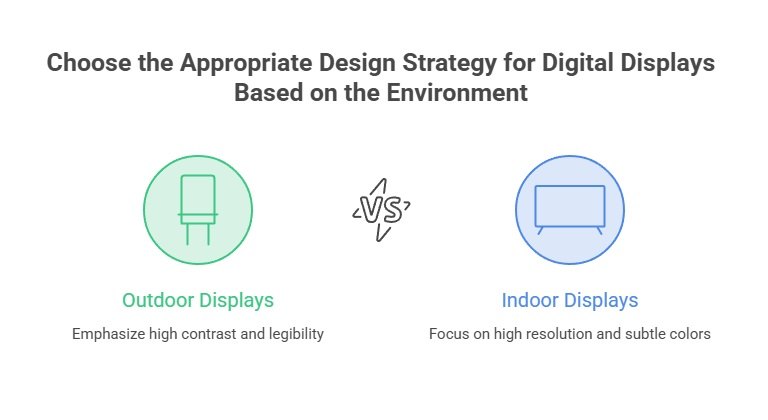
Use highly saturated colors and dark backgrounds with bright text. Rely on thick, sans-serif fonts to maximize legibility. Make sure the text stays easily readable from a distance (e.g., 40 feet away for a consumer traveling at 30 mph).
Connected TV displays work differently. Here, ads are usually best viewed in a dark, controlled indoor environment. You should use high-resolution and cinematic details. More subtle color palettes also work well. These would otherwise wash out on a street-level billboard in broad daylight.
All these visuals need to be stored securely. So you need to have strict visual asset management workflows to help your team keep these high-contrast, cinematic files organized and easy to use.
Know when to use audio
You need to adapt the audio to the screen type. On connected television, sound is a driver of emotion, so use crisp voiceovers, high-fidelity soundscapes, and memorable audio cues. These help capture and retain your audience.
That said, you must plan for complete silence during the transition to DOOH ads. Because most of these outdoor screens work silently, you must rely on visuals. Your message must incorporate great visuals, bold imagery, and moving text.
If your outdoor ad requires a voiceover to make sense, you’re not doing it right. Design for silence first. And ensure your core value proposition is clear within seconds.
Use dynamic creative optimization (DCO)
Dynamic creative optimization changes static campaigns into relevant experiences for your audience. Demand-side platforms (DSPs) help you automatically serve hundreds of creative variations in real time, driven by audience signals.
Instead of playing a single generic video, you connect your creatives to strong contextual triggers. For instance, you can use live geographic data and weather APIs to automatically swap your product shown on screen.
If the temperature drops, the screen displays a hot coffee. And if it rises, the image swaps to an iced coffee. You don’t need to make updates manually. This level of personalization significantly increases the relevance of your ads.
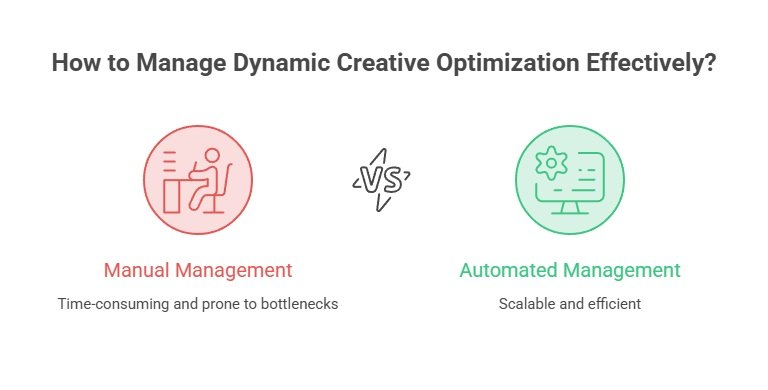
But managing so many variations can quickly cause bottlenecks. So you must avoid disorganized approval processes. Partnering with a paid media management ads agency can help you use marketing automation to scale production and allocate budgets across these effective formats.
How to achieve full-funnel marketing across screens
We’ll look at connecting the physical and digital for full-funnel marketing next, so you can stop treating these channels in isolation.
Connect location data with behavioral targeting
A billboard view is hard to measure without a digital connection. That said, you can link physical ad exposure directly to online action with cross-screen syncing.
This involves using mobile location data to identify devices that were exposed to your DOOH ads. Once identified, you can apply behavioral targeting and use your first-party data to serve sequential streaming ads to the same audience when they get home.
It’s important to maintain your brand’s identity during this outdoor-to-digital realm. Even with changes in aspect ratio, your outdoor visuals have to retain the same aesthetic as your living room commercial.
This is an imperfect science, though. Plus, privacy regulations may limit some visibility with this device graph matching. But this layered approach works well. When you synchronize these channels, performance improves.
Vistar Media and UM’s industry study supports this. It shows that retargeting consumers online after outdoor exposure drove a 5.5% conversion rate.
Use interactive ads to help drive foot traffic
Interactive advertisements can connect top-of-funnel brand awareness and direct action. Take streaming sites, for instance. Interactive parts, such as “send to phone” prompts, allow viewers to request an offer directly. Or scan a code without interrupting their experience.
And when you pair this digital interaction with localized outdoor displays, you create a hyperlocal conversion engine. A viewer might interact with your streaming ad at home.
Then, they walk past a dynamic digital panel near your store the next day. This helps drive physical visits. Plus, it helps capture local demand. You can refine this process using proven lead-generation strategies.
It’s worth noting: interactive elements require clear, frictionless calls to action. If the process is confusing or requires too many steps, your viewers will ignore it.
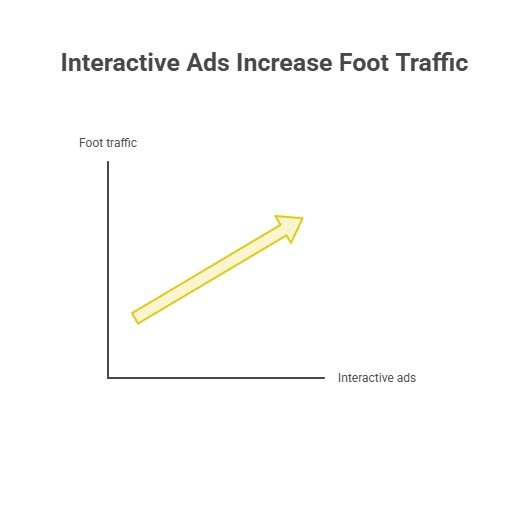
This investment is worth the effort. Data from MNTN Research shows that interactive streaming formats increase foot traffic by 13%. And compared to passive video placements, it also improves unaided recall by 36%.
Creative pitfalls to avoid when using programmatic DOOH and CTV
Next, here are common mistakes that negatively affect your campaign’s performance. Avoid these pitfalls across your programmatic DOOH and CTV inventory.
Misusing QR codes on highway billboards
Placing QR codes on highway billboards to try to track conversions is not advisable. Because QR codes require active engagement, where users must pause and scan, targeting drivers is dangerous.
The law recognizes the safety risks drivers face when taking their eyes off the road. In fact, Vistar Media shares that most states have outlawed them on highway displays.
Instead, use these QR codes in high-dwell areas, such as street benches. Or slow-moving urban panels. Matching these to safe and slow environments helps turn a moment’s impression into a measurable digital action.
Ignoring frequency capping and audience segments
As much as you want people to see your ads, unlimited ad exposure can exhaust your targeted audience segments.
Follow this A/B test process to evaluate your creative choices without causing ad fatigue:
Isolate audience segments based on device type and location. Serve the control creative to one group, and the variant to another. Use frequency capping to limit ad exposure.
Cross-channel A/B testing provides deep performance insights. But running tests without frequency limits may annoy users. This can negatively impact trust in your brand and the campaign’s performance.
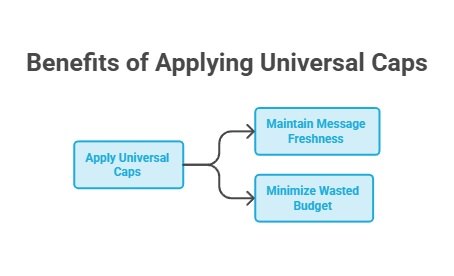
Applying universal caps can help your message stay fresh. It likewise minimizes the wasted budget on excessive impressions.
Ensure you assess the performance of your marketing efforts. This helps you track viewer intent, manage ad fatigue, and monitor overall campaign health.
Make your CTV and DOOH ad creatives your competitive advantage
What you execute creatively depends on the environment the consumer is in. So you cannot rely on a one-size-fits-all approach to ad formats. It’ll negatively impact your campaign’s engagement rates.
You need a custom approach when going from living room TV screens to outdoor digital walls. Here’s how to ensure you’re on the right track: evaluate your current creatives and optimize them for their particular environments.
If you’re ready to improve your ad performance, review your current configuration against these advanced B2B marketing moves to turn your ad assets into your competitive edge.
FAQ
What is the difference between CTV and DOOH advertising?
CTV advertising shows premium video content to viewers relaxing at home via smart TVs and gaming consoles. DOOH advertising targets on-the-go consumers interacting with digital screens in public spaces. CTV is great for narrative purposes, whereas DOOH requires rapid, high-impact visual messaging.
What creative changes are necessary for CTV ads to be more effective?
Your CTV creatives need high-resolution, cinematic visuals and rich audio to deliver a fully absorbing experience at home. CTV ads have completion rates of up to 95.2%. So you need to extend your narrative arcs and use emotional storytelling to capitalize on this viewer environment.
How should creative strategies differ for DOOH ads compared to traditional digital ads?
Unlike traditional digital ads, DOOH advertisements must communicate to viewers without relying on sound. You need to remove complex value propositions. Stick to a single, bold claim to win consumers’ micro-attention spans. This helps your message register instantly with viewers.
How can advertisers optimize creative assets for the unique screen sizes and environments of DOOH displays?
Programmatic platforms can help advertisers use multiple high-contrast variations for DOOH displays. Ensure you prioritize stark backgrounds and thick sans-serif fonts to improve readability when there’s distance and environmental glare.